Blog

  • Do Phytoestrogens Actually Help With Menopause? The Evidence on Soy, Flax and Lentils

    phytoestrogen rich foods for menopause soy flaxseed lentils edamame

    Phytoestrogens are one of the most discussed — and most misunderstood — topics in menopause nutrition. Depending on which source you read, they are either nature’s answer to HRT, dangerous hormone disruptors that cause cancer, or somewhere in the complicated middle ground where most nutritional science actually lives.

    If you have spent any time in the perimenopause or menopause space, you have almost certainly encountered conflicting advice about soy. Eat it every day — it reduces hot flashes. Avoid it completely — it disrupts your thyroid. It causes breast cancer. It prevents breast cancer. The noise is significant, and most of it is not particularly useful to a woman trying to make a practical decision about what to eat for breakfast.

    This article cuts through that noise. Not by dismissing the complexity or oversimplifying the evidence, but by looking honestly at what the peer-reviewed research actually shows — what phytoestrogens are, how they work, which ones have the strongest evidence for menopause symptom relief, and what the safety picture genuinely looks like for the foods most women are wondering about.

    The answer is more nuanced than either camp suggests — and more practically useful.


    Episode: “Phytoestrogens and Menopause — The Evidence Without the Agenda” — Real Food Science Podcast


    Key Takeaways

    • Phytoestrogens are plant compounds that weakly bind to oestrogen receptors — they are not oestrogen, and they do not behave identically to oestrogen in the body
    • The three main classes — isoflavones, lignans, and coumestans — have different food sources, different potencies, and different evidence bases for menopause symptom relief
    • The strongest evidence is for isoflavones from soy foods reducing hot flash frequency and severity — with a 2021 meta-analysis showing approximately 20% reduction in hot flash frequency
    • Lignans from flaxseed have specific evidence for hot flash reduction and oestrogen metabolism support through the estrobolome
    • The safety concerns around soy and breast cancer are largely based on animal studies — population-level data from Asian populations consuming soy throughout life does not support elevated risk
    • Individual response varies significantly — equol producers (women who convert soy isoflavones to the more potent equol in the gut) see stronger benefits than non-producers
    • Phytoestrogens from whole food sources are safe for most women and complement rather than replace the broader anti-inflammatory dietary approach

    What Phytoestrogens Actually Are

    Phytoestrogens are a diverse group of plant-derived compounds that have a chemical structure similar enough to oestrogen that they can bind to oestrogen receptors in human tissue — though with considerably weaker affinity than endogenous oestrogen. “Phyto” simply means plant — so phytoestrogen means plant oestrogen, though this name is somewhat misleading because they are not oestrogen and do not function identically to it.

    There are three main classes relevant to menopause nutrition:

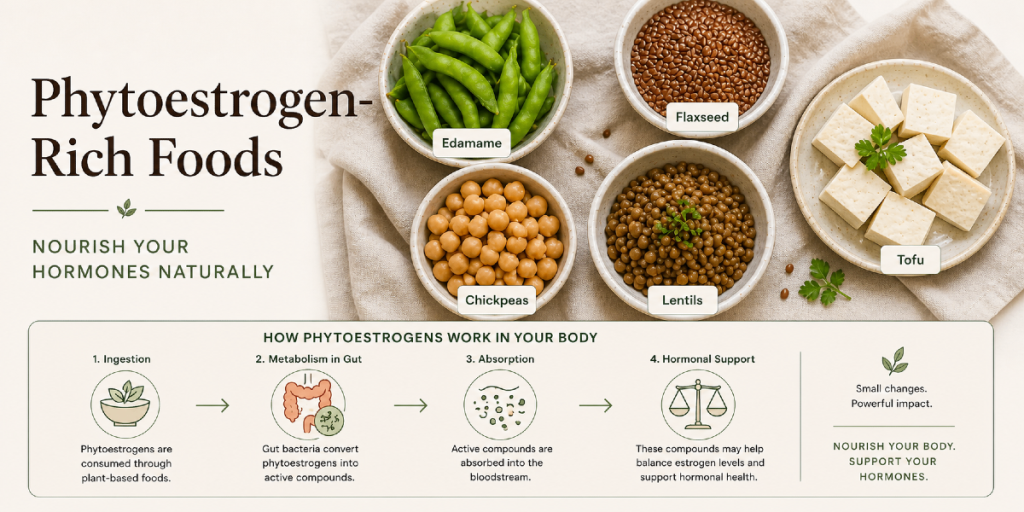
    Isoflavones — found primarily in soy and soy products (edamame, tofu, tempeh, miso, soy milk). The main isoflavones are genistein, daidzein, and glycitein. These are the most extensively studied phytoestrogens in relation to menopause, with the largest body of clinical research.

    Lignans — found in flaxseed (the richest source by a significant margin), sesame seeds, whole grains, legumes, and certain fruits and vegetables. The main lignans are secoisolariciresinol diglucoside (SDG) in flaxseed, which gut bacteria convert to the active forms enterodiol and enterolactone. Lignans are also relevant to oestrogen metabolism through the estrobolome — the gut bacterial community that regulates oestrogen recycling, covered in the gut-hormone connection article.

    Coumestans — found in sprouted legumes, particularly clover and alfalfa sprouts. Less commonly consumed in typical Western diets and less extensively studied than isoflavones or lignans.

    The potency of phytoestrogens relative to endogenous oestrogen is considerably lower — typically 0.001 to 0.1% of the activity of oestradiol at the oestrogen receptor, depending on the tissue and receptor subtype. This relative weakness is actually clinically relevant — it means they can weakly stimulate oestrogen-responsive pathways when oestrogen is low (as in menopause) while potentially moderating excessive oestrogen activity when levels are high (as in oestrogen dominance in early perimenopause).


    How Phytoestrogens Work in the Body — The Receptor Story

    Understanding how phytoestrogens interact with oestrogen receptors explains why the evidence is more nuanced than simple “they work” or “they don’t work.”

    There are two main oestrogen receptor subtypes in human tissue: oestrogen receptor alpha (ERα) and oestrogen receptor beta (ERβ). Endogenous oestrogen binds to both, producing effects in reproductive tissue, bone, cardiovascular tissue, brain, and gut. Phytoestrogens — particularly isoflavones — preferentially bind to ERβ, which is found in high concentrations in bone, brain, and cardiovascular tissue, but in lower concentrations in breast and uterine tissue than ERα.

    This receptor selectivity has two important clinical implications:

    First, it may explain why phytoestrogens produce measurable benefits in areas like bone protection, cardiovascular health, and cognitive function — where ERβ is highly expressed — while having less pronounced effects on reproductive tissue.

    Second, it is the basis for the theoretical safety argument in relation to breast cancer risk — because breast tissue expresses proportionally more ERα than ERβ, phytoestrogens theoretically have less stimulatory effect on breast tissue than endogenous oestrogen.
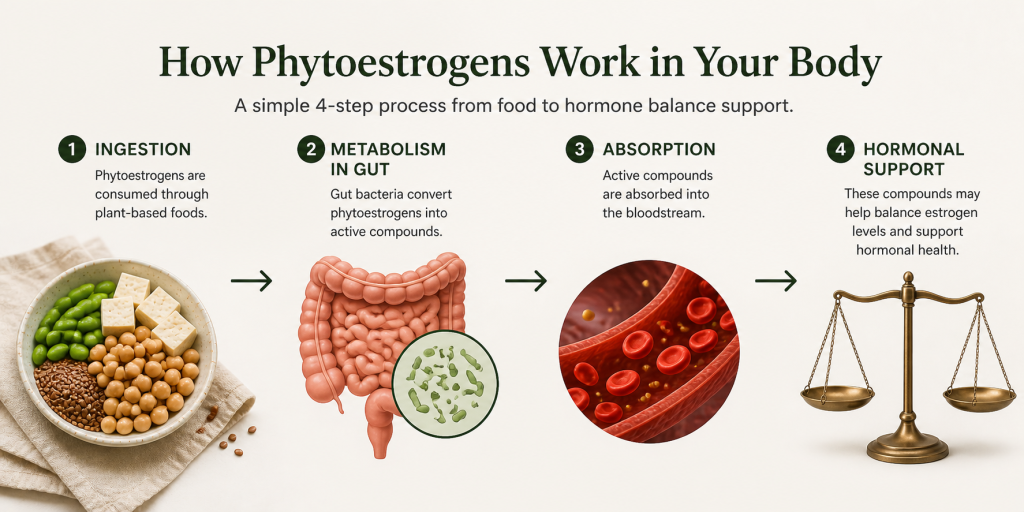

    how phytoestrogens work in the body during menopause

    The Evidence for Hot Flash Reduction

    Hot flash frequency and severity is the most studied endpoint for phytoestrogen interventions, and the evidence is the strongest in this area.

    Soy isoflavones

    A 2021 meta-analysis published in Menopause — the journal of the Menopause Society — reviewed 17 randomised controlled trials and found that soy isoflavone supplementation reduced hot flash frequency by approximately 20% and severity by 26% compared to placebo. These effect sizes are modest compared to HRT but are clinically meaningful, particularly for women who cannot or choose not to use hormone therapy.

    The dose used in most trials showing significant benefit was 40-80mg of total isoflavones daily — approximately the amount provided by one to two servings of soy food. Edamame provides approximately 18mg per 100g serving. A serving of firm tofu provides approximately 20-35mg. Tempeh provides approximately 40mg per 100g serving.

    An important nuance: the isoflavone daidzein is converted in the gut by certain bacterial species into equol — a more potent oestrogenic compound than daidzein itself. Approximately 30-50% of Western women are equol producers — those who harbour the necessary gut bacteria. Equol producers consistently show stronger benefits from soy isoflavone interventions than non-producers. This is one reason the research shows such variable individual responses — roughly half of women will see stronger effects than the trial averages suggest, and half will see weaker effects.

    Flaxseed lignans

    A 2007 randomised trial published in the Journal of the Society for Integrative Oncology found that women eating approximately 40g of ground flaxseed daily for six weeks reported a 57% reduction in hot flash frequency and a 70% reduction in hot flash scores — results comparable to some hormone therapy trials in that study population.

    Ground flaxseed is the richest dietary source of lignans — providing approximately 300mg of SDG per 100g, compared to the next richest sources (sesame seeds at approximately 29mg per 100g, sunflower seeds at approximately 11mg per 100g). The key is that the seeds must be ground — whole flaxseeds pass through the gut largely intact, with the lignans inside the seed coat inaccessible to gut bacteria.

    Two tablespoons of ground flaxseed daily — approximately 14g — provides a meaningful lignan dose while also delivering ALA omega-3 and a useful fibre contribution. This is one of the most evidence-backed, low-cost, and practically simple additions available to perimenopausal women.

    Red clover isoflavones

    Red clover contains isoflavones including formononetin and biochanin A, which are converted in the gut to daidzein and genistein. Several trials using red clover supplements have shown modest reductions in hot flash frequency — the evidence is generally positive but less consistent than for soy isoflavones, partly because red clover products vary significantly in their isoflavone content.


    The Evidence Beyond Hot Flashes

    Bone density

    Multiple clinical trials have found that soy isoflavones and flaxseed lignans have a modest protective effect on bone mineral density in postmenopausal women, likely through their preferential binding to ERβ in bone tissue. A 2010 meta-analysis in Osteoporosis International found that isoflavone supplementation was associated with significantly less bone mineral density loss in postmenopausal women compared to controls. The effect is smaller than HRT but meaningful as part of a comprehensive bone protection strategy alongside adequate calcium, vitamin D, and strength training.

    Cardiovascular markers

    The evidence for phytoestrogens and cardiovascular risk markers is reasonably consistent — soy protein and isoflavones are associated with modest reductions in LDL cholesterol and improvements in endothelial function in postmenopausal women. The American Heart Association’s position has evolved from endorsing soy protein for cardiovascular health to a more cautious view of the evidence, but the direction of effect remains positive in most trials.

    Cognitive function

    Several trials have examined isoflavones and cognitive function in postmenopausal women with mixed results. A 2012 study found that 25mg daily isoflavone supplementation improved measures of cognitive speed and memory in recently postmenopausal women. The cognitive benefits appear more consistent in women who are closer to menopause — suggesting a potential role in the cognitive transition period that aligns with the ERβ expression in hippocampal tissue.

    Oestrogen metabolism and the estrobolome

    Lignans from flaxseed interact with the estrobolome — the gut bacterial community covered in the gut-hormone connection article — in ways that may support healthier oestrogen metabolism and recycling. Women with higher lignan intake show different urinary oestrogen metabolite profiles, with proportionally higher levels of protective 2-hydroxyoestrone relative to more proliferative oestrogen metabolites. This oestrogen metabolite balance is increasingly recognised as clinically relevant to hormonal health.
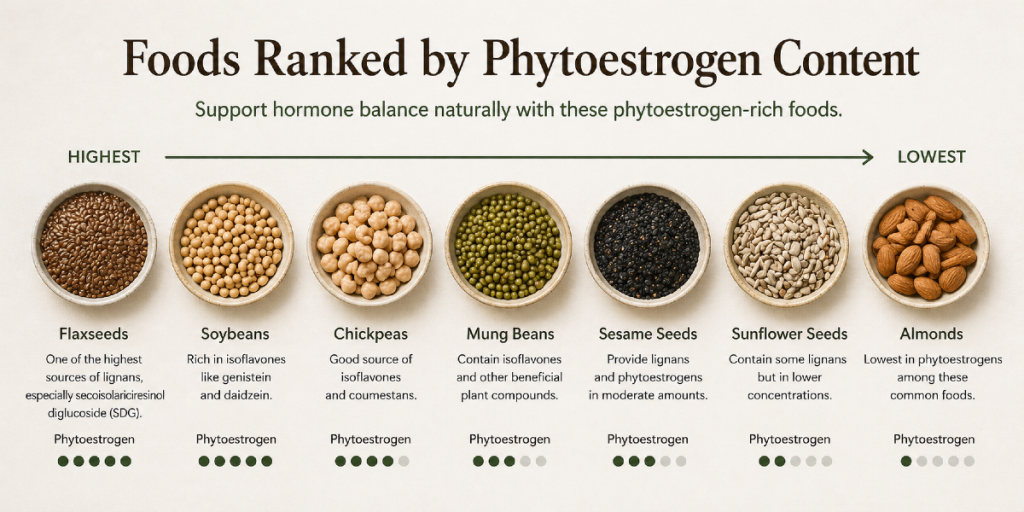

    foods highest in phytoestrogens for perimenopause and menopause

    The Safety Questions — Addressed Honestly

    Phytoestrogens and breast cancer

    This is the question most women ask first and most urgently. The short answer is that the population-level evidence does not support the concern — but the nuance matters.

    The concern arose from animal studies in which very high doses of isolated isoflavones stimulated oestrogen-sensitive breast cancer cell growth in rodent models. These studies used doses far in excess of what any human diet would provide and involved forms of isoflavones that differ from those in whole food sources.

    Human epidemiological data tells a different story. Multiple large-scale studies of Asian populations — who consume significant amounts of soy throughout life — show either no elevated breast cancer risk or reduced risk compared to low-soy populations. A 2014 meta-analysis in the American Journal of Clinical Nutrition found that higher soy intake was associated with a significant reduction in breast cancer risk in Asian women and no significant association in Western women.

    The current position of most major cancer research organisations — including Cancer Research UK and the American Cancer Society — is that whole soy food consumption is safe for women with or without a history of breast cancer, based on the available evidence. This does not extend unequivocally to high-dose isolated isoflavone supplements taken over years — but it does apply to the food-first approach advocated throughout Real Food Science.

    The nuanced honest answer: whole soy food consumption at two to three servings per week is not associated with increased breast cancer risk in the literature, and may be associated with modest reduction in risk. If you have a personal or family history of hormone-sensitive cancer, discuss with your oncologist before significantly increasing soy intake — not because the evidence mandates avoidance, but because the conversation belongs in that clinical relationship.

    Phytoestrogens and thyroid function

    Soy isoflavones have the potential to inhibit thyroid peroxidase — an enzyme involved in thyroid hormone production — at high doses. In women with adequate iodine status and no underlying thyroid dysfunction, this effect is not clinically significant at normal dietary intake levels. In women with hypothyroidism taking levothyroxine, large amounts of soy may interfere with medication absorption — the practical advice is to leave at least four hours between taking thyroid medication and consuming significant soy.

    If you have a diagnosed thyroid condition, discuss soy intake with your prescribing clinician. If you have normal thyroid function, regular dietary soy is not a concern at food quantities.

    Phytoestrogens and HRT

    Phytoestrogens from whole food sources are safe to consume alongside HRT — the quantities delivered through food are far too small to meaningfully interact with prescribed hormone doses. Anti-inflammatory foods and HRT work in parallel rather than in competition. Many women find that the combination produces better symptom outcomes than either approach alone.


    The Individual Response Question — Why Results Vary

    If you have tried eating soy regularly and noticed no change in your hot flash frequency, it does not necessarily mean phytoestrogens are not for you. The most significant variable in phytoestrogen response is equol producer status — whether your gut bacteria can convert the soy isoflavone daidzein into equol.

    Equol is significantly more potent than daidzein in binding to ERβ and producing oestrogenic effects. Equol producers — approximately 30-50% of Western women, compared to 50-70% of Asian women whose gut bacteria have been exposed to soy throughout life — see measurably stronger benefits from soy isoflavone interventions in clinical trials.

    You cannot know your equol producer status without testing, but there are indirect indicators. If you have been eating soy regularly for several weeks without noticing any change in vasomotor symptoms, you may be a non-producer — in which case lignans from flaxseed, which do not rely on equol conversion, may produce stronger effects for you.

    Gut microbiome diversity also influences lignan conversion — enterolignans are produced by gut bacteria, so a depleted microbiome reduces the conversion rate. This is one more reason why the gut health interventions covered in the 30 plants article and the gut-hormone connection article are relevant to phytoestrogen efficacy — building microbiome diversity improves the conversion of both soy isoflavones to equol and flaxseed lignans to active enterolignans.


    The Practical Phytoestrogen Strategy

    Based on the evidence, here is the practical approach for women in perimenopause and menopause:

    Start with ground flaxseed daily Two tablespoons daily — in porridge, yoghurt, smoothies, or salad dressings. This is the highest-lignan food available, the evidence for hot flash reduction is strong, and it delivers ALA omega-3 and fibre simultaneously. Grind whole seeds yourself (coffee grinder) or buy pre-ground and store in the fridge. Cost: approximately £2-3 per month.

    Add one to two servings of whole soy food per day Edamame as a snack, tofu in stir-fries, tempeh in salads, miso in soups. Aim for 40-80mg of isoflavones daily — achievable through one to two servings of soy food. If you have never eaten soy regularly, introduce it gradually over two to three weeks while monitoring symptoms.

    Include legumes broadly Chickpeas, lentils, black beans — all provide modest amounts of isoflavones and contribute to the plant diversity that supports equol production. These are cornerstone anti-inflammatory foods independently of their phytoestrogen content.

    Track your symptoms Because individual response to phytoestrogens varies significantly — particularly between equol producers and non-producers — systematic symptom tracking is more useful here than for almost any other dietary intervention. The Menopause Symptom Tracker linked below gives you the structure to track hot flash frequency, severity, and other symptom measures consistently so you can see whether the dietary change is producing the expected benefit within your specific biology.

    Give it eight to twelve weeks The evidence suggests that meaningful reductions in hot flash frequency from phytoestrogen interventions emerge over six to twelve weeks of consistent intake. Less than four weeks is insufficient to draw conclusions about your individual response.


    Free Resource: Start Tracking Before You Start Changing

    Symptom tracking before and during any dietary intervention is what converts vague impressions into actionable data. Without a baseline, you cannot see whether the change is working.

    → Download the free Menopause Bloat Trigger Checklist — identify your personal bloating and inflammation pattern before adding new foods, so you can distinguish phytoestrogen benefits from other dietary effects.


    Go Deeper: The Menopause Symptom Tracker

    The Menopause Symptom Tracker gives you a structured daily log covering all twelve core menopause symptoms — including hot flash frequency and severity, sleep quality, mood, and digestive symptoms — with a monthly pattern view that makes individual food and lifestyle correlations visible over time. Essential for any woman testing phytoestrogen foods and wanting to know whether they are working.


    FAQ

    How much soy is too much? The evidence suggests that two to three servings of whole soy food daily is well within a safe and beneficial range for most women. The concerns about soy relate primarily to isolated isoflavone supplements at very high doses over extended periods — not to whole soy food consumption. Two servings of edamame or tofu per day provides approximately 40-70mg of isoflavones — within the range showing clinical benefit without approaching the doses used in studies raising theoretical concerns.

    Can I get enough phytoestrogens from flaxseed alone without eating soy? Yes. Flaxseed lignans and soy isoflavones work through overlapping but not identical mechanisms. Women who choose not to eat soy — for taste, ethical, or medical reasons — can meaningfully support phytoestrogen intake through two tablespoons of ground flaxseed daily, legumes broadly, sesame seeds, and wholegrains. The evidence for flaxseed specifically is strong enough to stand alone as a phytoestrogen strategy.

    I am on tamoxifen — can I eat phytoestrogen foods? This is a clinical question that requires discussion with your oncologist. The theoretical concern is that phytoestrogens could compete with tamoxifen at the oestrogen receptor. Current guidance varies — some oncologists advise caution with soy foods during tamoxifen treatment, others do not. Do not make this decision based on a nutrition article — have the conversation with your prescribing clinician who knows your specific situation.

    Do phytoestrogens help with symptoms other than hot flashes? Yes — as covered above, the evidence extends to modest bone protection, cardiovascular marker improvement, and potentially cognitive function. Lignan metabolism through the estrobolome also supports healthier oestrogen metabolite profiles. The evidence outside of hot flashes is less consistent and the effect sizes are smaller, but the direction is positive across multiple relevant endpoints.

    Will eating phytoestrogens affect my HRT dose? No — the amounts of phytoestrogens from whole food sources are far too small to meaningfully interact with prescribed HRT doses. They do not substitute for HRT or alter its pharmacological action. They are complementary dietary elements, not competing interventions.


    Sources

    • Messina, M. (2016). Soy and health update: evaluation of the clinical and epidemiologic literature. Nutrients, 8(12).
    • Franco, O.H. et al. (2016). Use of plant-based therapies and menopausal symptoms: a systematic review and meta-analysis. JAMA, 315(23).
    • Pruthi, S. et al. (2007). Pilot evaluation of flaxseed for the management of hot flashes. Journal of the Society for Integrative Oncology, 5(3).
    • Morabito, N. et al. (2002). Effects of genistein and hormone-replacement therapy on bone loss in early postmenopausal women. Journal of Bone and Mineral Research, 17(10).
    • Shu, X.O. et al. (2009). Soy food intake and breast cancer survival. JAMA, 302(22).
    • Atkinson, C. et al. (2004). The effects of phytoestrogen isoflavones on bone density in women. American Journal of Clinical Nutrition, 79(2).
    • Guha, N. et al. (2009). Soy isoflavones and risk of cancer recurrence in a cohort of breast cancer survivors. Breast Cancer Research and Treatment, 118(2).

    Related Articles


  • The Omega-6 Overload: Why Your Modern Diet Is Fuelling Chronic Inflammation

    If there is one nutritional shift that explains more about the chronic inflammation epidemic — and the worsening of menopause symptoms in women eating modern Western diets — than almost any other, it is this: the collapse of the omega-6 to omega-3 ratio.

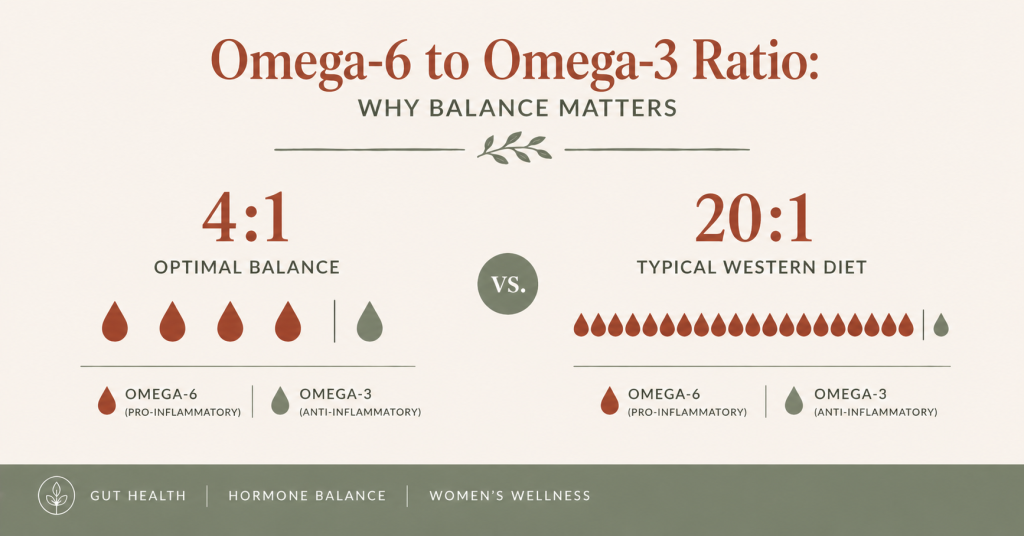
    For most of human evolutionary history, people consumed omega-6 and omega-3 fatty acids in roughly equal amounts — a ratio of approximately 1:1 to 4:1. Today, the average Western diet delivers a ratio somewhere between 15:1 and 20:1 in favour of omega-6. That shift — driven almost entirely by the industrialisation of seed oils and the displacement of traditional whole food fats — has happened within the last 100 years. Our inflammatory biology has not caught up.

    For women in perimenopause and menopause, where the protective anti-inflammatory buffer of oestrogen is already withdrawing, this omega-6 overload does not merely contribute to background inflammation. It amplifies the hormonal transition itself — worsening hot flashes, intensifying joint pain, deepening brain fog, disrupting sleep, and accelerating the gut permeability changes that drive a cascade of further symptoms.

    Understanding the omega-6 to omega-3 ratio is not advanced nutritional biochemistry. It is one of the most practical and immediately actionable areas of nutrition science available to women in midlife — because shifting the ratio is largely a matter of swapping a handful of everyday foods.


    [Podcast Player Block — Episode: “The Omega-6 Overload — Why the Modern Diet Is Making Menopause Worse” — Real Food Science Podcast]


    Key Takeaways

    • The omega-6 to omega-3 ratio in the modern Western diet sits at approximately 15-20:1 — far above the 1:1 to 4:1 ratio at which human inflammatory biology evolved
    • Omega-6 and omega-3 compete for the same enzymes — when omega-6 dominates, the balance of inflammatory versus anti-inflammatory signalling molecules shifts decisively toward inflammation
    • For women in perimenopause and menopause, where oestrogen’s anti-inflammatory protection is declining, the omega-6 overload amplifies every inflammation-driven symptom
    • The primary driver of omega-6 overload is seed oil consumption — in cooking oils and throughout packaged foods
    • Shifting the ratio requires both reducing omega-6 intake and increasing omega-3 intake — the two levers work together
    • Measurable changes in the omega-6 to omega-3 ratio in cell membranes occur within four to eight weeks of sustained dietary change

    What Omega-6 and Omega-3 Fatty Acids Actually Are

    Before getting into the ratio and its consequences, it helps to understand what these fatty acids actually are and why the body needs both.

    Omega-6 and omega-3 are polyunsaturated fatty acids — fats with multiple double bonds in their carbon chain. They are classified as essential fatty acids because the human body cannot synthesise them and must obtain them from food. Both are required for normal biological function. Neither is inherently bad.

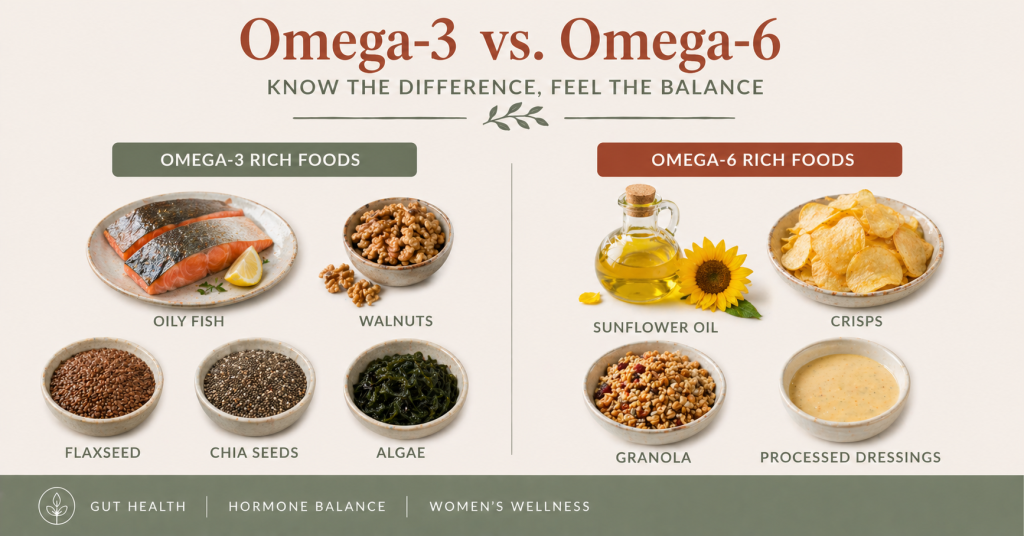
    The primary dietary omega-6 fatty acid is linoleic acid (LA) — found in high concentrations in seed oils (sunflower, corn, soybean, rapeseed), nuts, and to a lesser extent in animal products. The body converts linoleic acid into longer-chain omega-6 fatty acids, most significantly arachidonic acid (AA).

    The primary dietary omega-3 fatty acids are alpha-linolenic acid (ALA) — found in flaxseed, walnuts, and chia seeds — and the long-chain EPA and DHA found in oily fish and algae. The body can convert ALA to EPA and DHA, but this conversion is inefficient — typically only 5-10% — which is why direct dietary sources of EPA and DHA from oily fish are so important.

    The critical point is what each fatty acid is converted into. Arachidonic acid — the downstream omega-6 product — is the precursor for a family of pro-inflammatory signalling molecules called eicosanoids: prostaglandins, thromboxanes, and leukotrienes that drive inflammation, pain signalling, blood clotting, and immune activation. EPA and DHA — the downstream omega-3 products — are converted into a different family of eicosanoids that are anti-inflammatory, vasodilatory, and pro-resolving.

    Both families are necessary. The balance between them determines your inflammatory tone.


    The Enzyme Competition — Why the Ratio Matters More Than Absolute Amounts

    The reason the ratio between omega-6 and omega-3 matters so much is the enzyme competition that sits at the centre of both pathways.

    The enzymes that convert linoleic acid to arachidonic acid — delta-6-desaturase and delta-5-desaturase — are the same enzymes that convert ALA to EPA and DHA. When omega-6 massively dominates the diet, these enzymes are almost entirely occupied processing linoleic acid. Very little capacity remains for omega-3 conversion.

    The consequences are twofold. First, arachidonic acid accumulates — providing more raw material for pro-inflammatory eicosanoid production. Second, EPA and DHA production is suppressed — reducing the availability of anti-inflammatory and pro-resolving mediators. The inflammatory balance tips in both directions simultaneously.

    At a ratio of 4:1 or lower, these enzyme systems process both pathways adequately — producing a balanced inflammatory signalling environment. At the modern ratio of 15-20:1, the omega-3 pathway is effectively outcompeted. The result is a chronic pro-inflammatory state that is not driven by any acute immune challenge — it is simply the baseline of the modern dietary pattern.


    How the Omega-6 Overload Specifically Affects Menopause

    The omega-6 to omega-3 ratio influences inflammation throughout the body and across the lifespan. But for women in perimenopause and menopause, the effect is amplified through a specific interaction with declining oestrogen.

    Oestrogen has direct anti-inflammatory properties — it suppresses certain inflammatory cytokines, moderates immune cell activity, and reduces the conversion of arachidonic acid to pro-inflammatory prostaglandins. While oestrogen levels are adequate, the inflammatory consequences of a high omega-6 diet are partly buffered by this hormonal protection.

    As oestrogen declines during perimenopause, that buffering diminishes. The same omega-6 load that was producing manageable background inflammation at 38 now produces a more pronounced and more symptomatic response at 46. Women notice that symptoms they had barely registered — occasional joint stiffness, mild bloating after certain meals, a slightly slower cognitive recovery after poor sleep — suddenly become persistent, disabling, and disproportionate to any obvious cause.

    The omega-6 overload has not changed. The body’s ability to buffer it has.

    Specific menopause symptoms directly driven by the omega-6 to omega-3 imbalance include:

    Hot flashes. Prostaglandins derived from arachidonic acid — the downstream omega-6 product — directly modulate the hypothalamic thermostat. Elevated AA-derived prostaglandins narrow the thermoneutral zone, increasing the frequency of vasomotor responses. Multiple studies have found that women with higher blood omega-3 levels report fewer and less severe hot flashes compared to those with higher omega-6 levels.

    Joint pain and stiffness. Arachidonic acid is the direct substrate for the COX-2 enzyme — the enzyme that produces the inflammatory prostaglandins driving joint inflammation. This is the same pathway targeted by NSAIDs like ibuprofen. A diet chronically high in omega-6 provides the raw material for this pathway continuously. Shifting the ratio toward omega-3 reduces the substrate available for COX-2 and provides EPA and DHA as competitive inhibitors of the pathway itself.

    Brain fog and mood. DHA is a structural component of neuronal cell membranes — it makes up approximately 30-40% of the polyunsaturated fatty acids in the brain. When the omega-6 to omega-3 ratio is high, omega-6 fatty acids displace DHA from neuronal membranes, reducing membrane fluidity and impairing synaptic transmission. Reduced DHA availability correlates with worse cognitive performance, lower mood, and increased neuroinflammation — all contributors to the cognitive symptoms of perimenopause.

    Gut permeability. As covered in the leaky gut article, high omega-6 polyunsaturated fats — particularly their oxidation products produced under heat — directly disrupt tight junction proteins in the gut lining. EPA and DHA, conversely, support tight junction integrity and reduce the LPS-driven inflammatory signalling that follows gut permeability.

    Sleep quality. EPA and DHA influence the production of serotonin and melatonin through their effects on the tryptophan conversion pathway. Women with higher omega-3 status consistently show better sleep quality measures — earlier sleep onset, more restorative sleep, fewer wakings. The 2-3am waking pattern driven partly by nocturnal cortisol spikes is also moderated by omega-3’s direct cortisol-blunting effect at the pituitary level.


    The Two Levers — Reducing Omega-6 and Increasing Omega-3

    Shifting the omega-6 to omega-3 ratio requires working both levers simultaneously. Reducing omega-6 alone without increasing omega-3 improves the ratio but does not maximise the anti-inflammatory benefit. Increasing omega-3 without reducing omega-6 is partially effective but remains limited by enzyme competition.

    Lever 1: Reducing omega-6

    The primary omega-6 source in the modern diet is seed oils — used in everyday cooking and present throughout packaged foods. As covered in detail in the seed oils article and the hidden seed oils article, replacing seed oil cooking fats with olive oil, butter, and ghee produces the most significant single reduction in daily omega-6 intake available through dietary change.

    Packaged food audit comes second — most processed foods contain seed oils as a primary ingredient. Removing the highest-omega-6 packaged foods from your regular purchasing (granola made with seed oils, shop-bought hummus, flavoured crackers, processed dressings) makes a meaningful additional reduction.

    A typical woman eating a standard Western diet consumes approximately 20-30g of linoleic acid daily. Replacing cooking oils and eliminating the highest-omega-6 packaged foods can reduce this to 8-12g daily — approximately the level at which the ratio begins to approach a more physiologically appropriate range, assuming adequate omega-3 intake.

    Lever 2: Increasing omega-3

    The omega-3 target for meaningful anti-inflammatory effect in perimenopausal women is:

    • EPA and DHA combined: 2-3g daily — achievable through two to three portions of oily fish per week plus supplementation if needed
    • ALA: approximately 2g daily from plant sources as an additional contribution (walnuts, ground flaxseed, chia seeds)

    Oily fish is the highest-priority omega-3 source because it provides EPA and DHA directly — the biologically active forms that do not require the inefficient ALA conversion step. Salmon, mackerel, sardines, anchovies, and trout are the richest sources. Tinned sardines and mackerel are affordable, sustainable, and nutritionally equivalent to fresh.

    For women who do not eat oily fish, algae-based omega-3 supplements are the only direct plant-based source of EPA and DHA. These are produced from the same algae that fish consume — making them nutritionally equivalent without the fishy aftertaste.

    Ground flaxseed, walnuts, and chia seeds provide ALA — which converts to EPA at approximately 5-10% efficiency and to DHA at lower rates still. While these are valuable additions that contribute to overall omega-3 status, they should not be the sole omega-3 strategy for women seeking meaningful inflammatory benefit.


    Where Spices and Herbs Fit In

    Reducing omega-6 and increasing omega-3 addresses the fatty acid ratio directly. But there is a parallel dietary lever that works on the same inflammatory pathways through different mechanisms: the polyphenols and bioactive compounds in anti-inflammatory spices and herbs.

    Turmeric’s curcumin, ginger’s gingerol, rosemary’s rosmarinic acid, and the flavonoids in oregano and thyme all inhibit NF-κB — the master transcription factor of inflammatory gene expression — through mechanisms that overlap with and complement the omega-3 pathway. These compounds do not correct the fatty acid ratio, but they reduce the inflammatory signalling downstream of arachidonic acid regardless of the ratio — making them particularly valuable as a complementary strategy.

    For women working to shift their omega-6 to omega-3 balance, adding therapeutic amounts of anti-inflammatory spices to daily cooking provides an additional anti-inflammatory mechanism that compounds with the fatty acid rebalancing. The evidence behind the top ten anti-inflammatory spices and herbs — including specific effective amounts and the mechanisms behind each one — is covered in full in the Top 10 Anti-Inflammatory Spices & Herbs guide linked below.


    The Timeline — What to Expect as the Ratio Shifts

    The omega-6 to omega-3 ratio in cell membranes changes gradually rather than immediately — because membrane remodelling requires existing fatty acids to be replaced during normal cell turnover. Different tissues turn over at different rates:

    Red blood cells: 120-day lifespan — measurable changes in red blood cell fatty acid composition (the most reliable biomarker of dietary omega-3 status) occur over four to eight weeks of consistent dietary change.

    Neuronal membranes: Longer-lived — significant cognitive benefits from omega-3 rebalancing typically emerge over eight to sixteen weeks of consistent intake.

    Inflammatory signalling: More immediate — the reduction in arachidonic acid substrate for prostaglandin production begins within days of reducing omega-6 intake. Acute inflammatory markers can shift within two to four weeks.

    The practical implication is that the ratio shift is a sustained intervention rather than a quick fix — but one where most women begin noticing symptomatic improvements within two to four weeks, with deeper benefits continuing to accumulate over two to three months of consistent dietary change.


    Practical Weekly Omega-3 Target

    Here is a concrete weekly food plan that achieves the omega-3 target while contributing to omega-6 reduction simultaneously:

    Monday: Tinned sardines on rye toast with olive oil for lunch Tuesday: Salmon fillet for dinner — 100g provides approximately 2g EPA+DHA Wednesday: Ground flaxseed (2 tbsp) in morning porridge or yoghurt — approximately 3.2g ALA Thursday: Mackerel fillet for dinner — approximately 2.5g EPA+DHA Friday: Walnut handful with afternoon snack — approximately 2.5g ALA Saturday: Smoked salmon with eggs for breakfast Sunday: Sardine or tuna salad for lunch — or a second salmon dinner

    That weekly pattern delivers approximately 10-12g combined EPA and DHA across the week — well above the anti-inflammatory threshold — alongside a meaningful ALA contribution from plant sources. Combined with the cooking oil swap covered in the cooking fats article, this approaches the dietary pattern that research consistently associates with lower inflammatory markers and reduced menopause symptom severity.


    Free Resource: Identify Your Inflammation Triggers

    Before building out a full omega-3 strategy, understanding your personal inflammatory pattern helps you identify which symptoms are most directly driven by fatty acid imbalance versus other contributors.

    → Download the free Menopause Bloat Trigger Checklist — a five-minute checklist that identifies your personal inflammation and bloating triggers, including several directly linked to the omega-6 to omega-3 imbalance.


    Go Deeper: Top 10 Anti-Inflammatory Spices & Herbs

    The Top 10 Anti-Inflammatory Spices & Herbs guide covers the ten spices and herbs with the strongest evidence for reducing inflammatory signalling in perimenopausal and menopausal women — including the specific compounds, effective amounts, and how to incorporate each one into everyday cooking to complement your omega-3 strategy.


    FAQ

    Do I need to take fish oil supplements or can I get enough omega-3 from food alone? Two to three portions of oily fish per week provides approximately the same EPA and DHA as a daily 1-2g fish oil supplement. For women who eat oily fish regularly, food sources are sufficient. For those who eat oily fish rarely or not at all, a high-quality fish oil or algae-based supplement providing at least 1g combined EPA and DHA daily is a practical addition. Look for supplements with a third-party purity certification — omega-3 supplements vary significantly in quality and oxidation levels.

    Is the omega-6 to omega-3 ratio the same concern for vegetarians and vegans? Yes — and potentially more so, because plant-based diets often include significant amounts of omega-6 from nuts, seeds, and plant oils while relying on ALA for omega-3, which converts inefficiently. Vegetarians and vegans should prioritise algae-based EPA and DHA supplements, minimise seed oil cooking fats, and maximise ALA sources (ground flaxseed, chia seeds, walnuts, hemp seeds). The ratio concern is diet-pattern independent — it is the absolute balance that matters, not whether the foods are animal or plant based.

    What is the omega-6 content of olive oil — does it contribute to the overload? Extra virgin olive oil is approximately 73% monounsaturated oleic acid (omega-9) and approximately 10-11% linoleic acid (omega-6). While olive oil does contain omega-6, its content is significantly lower than seed oils (sunflower oil is 65% linoleic acid), and the oleic acid does not compete in the same enzyme pathways as omega-6. Olive oil does not meaningfully contribute to omega-6 overload when used as the primary cooking fat — which is why it is the recommended replacement in the cooking fat swap.

    How do I know if my omega-6 to omega-3 ratio is improving? The most accurate measure is an omega-3 index blood test — which measures EPA and DHA as a percentage of total red blood cell fatty acids. This test is available through several private health testing services and provides a baseline and progress measure. However, most women find that symptomatic improvement — reduced joint stiffness, improved sleep quality, better cognitive clarity — is a reliable proxy indicator that the ratio is shifting in the right direction, even without testing.

    Is there a point where omega-3 can be too high? Very high omega-3 intake — above 5g EPA and DHA daily from supplements — can have blood-thinning effects relevant to women on anticoagulant medications. At dietary levels from food (two to three portions of oily fish per week) and standard supplement doses (1-3g daily), there are no clinically significant adverse effects in otherwise healthy women. Discuss with your GP if you are taking blood-thinning medications.


    Sources

    • Simopoulos, A.P. (2016). An increase in the omega-6/omega-3 fatty acid ratio increases the risk for obesity. Nutrients, 8(3), 128.
    • Calder, P.C. (2017). Omega-3 fatty acids and inflammatory processes: from molecules to man. Biochemical Society Transactions, 45(5).
    • Lucas, M. et al. (2009). Ethyl-eicosapentaenoic acid for the treatment of psychological distress and depressive symptoms in middle-aged women. Menopause, 16(2).
    • Yehuda, S. et al. (2005). The role of polyunsaturated fatty acids in restoring the aging neuronal membrane. Neurochemical Research, 30(6-7).
    • Ramsden, C.E. et al. (2013). Use of dietary linoleic acid for secondary prevention of coronary heart disease. British Medical Journal, 346.
    • Blasbalg, T.L. et al. (2011). Changes in consumption of omega-3 and omega-6 fatty acids in the United States during the 20th century. American Journal of Clinical Nutrition, 93(5).
    • Peet, M. & Stokes, C. (2005). Omega-3 fatty acids in the treatment of psychiatric disorders. Drugs, 65(8).

    Related Articles

  • Stress, Cortisol and Inflammation: The Menopause Triangle Nobody Explains

    Stress, Cortisol and Inflammation: The Menopause Triangle Nobody Explains

    There is a conversation happening in perimenopause clinics that focuses almost entirely on oestrogen — but leaves out the role of cortisol, stress, and inflammation in making menopause symptoms worse. This article addresses what gets left out.

    This is not wrong. But it is significantly incomplete.

    Because sitting alongside the hormonal story is a second story that most women in perimenopause are never told — and that, once understood, explains why some women experience the transition so much more intensely than others eating similar diets and living similar lives.

    That story is about cortisol. About what happens when the stress hormone and the sex hormones occupy the same biological territory. About how chronic stress does not merely make you feel worse — it chemically amplifies every symptom you are already experiencing through a mechanism that is specific, well-documented, and directly responsive to the food and lifestyle choices you make every single day.

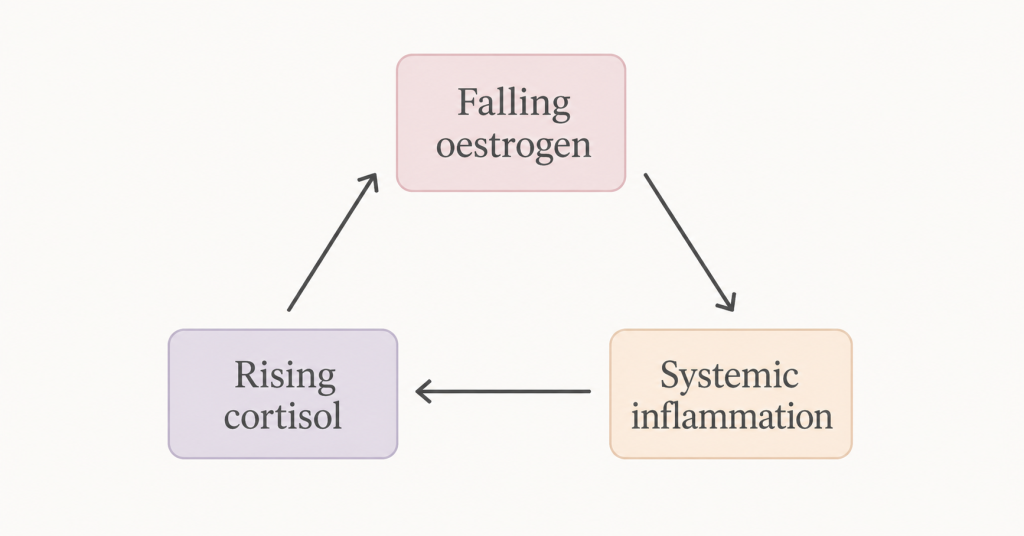
    This is the menopause triangle: oestrogen decline, cortisol elevation, and systemic inflammation. Three forces operating simultaneously, each one amplifying the others. Understanding how they interact is one of the most useful things you can do for your experience of this transition.


    Episode: “Cortisol and Menopause — The Triangle Nobody Explains” — Real Food Science Podcast


    Key Takeaways

    • Cortisol and oestrogen compete for the same biological raw materials — chronic stress accelerates the hormonal decline of perimenopause through a mechanism called pregnenolone steal
    • Cortisol directly activates the same inflammatory pathways that falling oestrogen is no longer suppressing — creating a compounding inflammatory effect
    • The HPA axis becomes hypersensitised during perimenopause — meaning stress responses are more intense, more prolonged, and harder to switch off than in earlier decades
    • Hot flashes, joint pain, sleep disruption, weight gain, brain fog, and mood instability all have a cortisol component that sits alongside the oestrogen component
    • Cortisol responds to dietary and lifestyle change faster than almost any other hormone — measurable changes within days, not months
    • The food-first cortisol strategy targets blood glucose stability, omega-3 support, magnesium repletion, and the evening cortisol cutoff

    The Biological Triangle — How Three Systems Collide

    To understand why stress hits so differently in perimenopause, you need to understand how oestrogen, cortisol, and inflammation relate to each other — not as separate systems but as an interconnected triangle where each corner affects both others.

    Corner one: Falling oestrogen

    Oestrogen is the anti-inflammatory buffer that most women carry silently through their twenties and thirties — suppressing inflammatory cytokines, maintaining gut lining integrity, modulating immune activity, and protecting the brain, joints, and cardiovascular system from inflammatory damage. As it declines in perimenopause, this buffer withdraws. Inflammatory baseline rises. Every inflammatory stimulus — including cortisol — produces a more significant response than it did before.

    Corner two: Rising cortisol baseline

    Perimenopause does not directly cause chronic stress — but it reliably coincides with the life stage at which many women carry the heaviest stress burden. Career demands, parenting teenagers, caring for ageing parents, relationship pressures, financial concerns — the forties and early fifties are frequently described by women as the most demanding decade of their lives. Chronic stress keeps cortisol elevated continuously rather than in healthy, episodic spikes.

    Beyond life circumstances, the HPA axis itself becomes more reactive during perimenopause. Oestrogen moderates the HPA stress response — it helps cortisol return to baseline after a stressor. As oestrogen falls, this dampening effect is lost. Stress responses become more intense, peak higher, and persist longer. The same stressor that produced a manageable cortisol response at 38 may produce a significantly larger and more prolonged response at 46.

    Corner three: Systemic inflammation

    Cortisol, paradoxically, is both anti-inflammatory and pro-inflammatory. In acute, short-term bursts it suppresses inflammation — this is why cortisol-derived steroids like prednisolone are used as anti-inflammatory medications. But in the chronically elevated state of ongoing stress, this relationship inverts. Cells become desensitised to cortisol’s anti-inflammatory signal — a process called glucocorticoid resistance — and the immune system loses its cortisol-mediated braking mechanism. Inflammatory cytokines rise. Gut permeability increases. The systemic inflammatory state that oestrogen was previously suppressing now has two drivers operating simultaneously.

    The triangle is self-reinforcing: falling oestrogen increases HPA reactivity, which elevates cortisol, which drives inflammation, which further sensitises the HPA axis, which produces more intense stress responses, which produces more cortisol. Understanding this loop is the first step to interrupting it.


    Pregnenolone Steal — How Stress Accelerates Hormonal Decline

    This is the mechanism most women are never told about — and it directly connects the stress response to the rate of hormonal decline in perimenopause.

    Pregnenolone is the precursor hormone from which your body manufactures cortisol, oestrogen, progesterone, testosterone, and DHEA. It is produced from cholesterol in the mitochondria of adrenal cells and is the raw material for the entire steroid hormone cascade.

    Your body has a clear hierarchy of priorities in how it allocates pregnenolone. Cortisol sits at the top — because from your body’s evolutionary perspective, managing an acute threat is more urgent than maintaining sex hormone levels. When the stress signal is chronic and sustained, the enzyme systems that convert pregnenolone toward cortisol are preferentially upregulated. The pathways toward oestrogen and progesterone receive less substrate.

    The result — called pregnenolone steal or cortisol steal — is that chronic stress depletes the precursor material available for sex hormone production. Oestrogen and progesterone levels drop faster and further than they would under the same hormonal trajectory without chronic stress. The perimenopause transition becomes more severe, more symptomatic, and more prolonged.

    This mechanism has a specific implication that matters practically: reducing chronic stress in perimenopause is not just about feeling calmer. It is about slowing the rate of hormonal decline. Every sustainable cortisol-reduction strategy — dietary, behavioural, or both — is also a partial hormonal protection strategy.

    Progesterone is particularly vulnerable to pregnenolone steal because it sits in a different branch of the steroid synthesis pathway from cortisol and is less prioritised when resources are scarce. This explains why the first hormonal symptoms of perimenopause — irregular periods, worsened PMS, sleep disruption, anxiety — are often progesterone-related symptoms, years before oestrogen begins its significant decline.


    How Cortisol Specifically Amplifies Each Menopause Symptom

    Understanding the cortisol-symptom connections in concrete terms makes the clinical picture much clearer than the generic “stress makes everything worse” framing.

    Hot flashes

    The hypothalamic thermostat that regulates the thermoneutral zone — the temperature window within which your body does not trigger a vasomotor response — is directly sensitised by both inflammatory cytokines and cortisol. Elevated cortisol activates the corticotropin-releasing hormone (CRH) pathway in the hypothalamus, which in turn modifies norepinephrine signalling in the temperature regulation circuits. Multiple studies have found that women with higher cortisol levels report significantly more frequent and more intense hot flashes, independent of their oestrogen status. Women who implement cortisol-reduction strategies consistently report meaningful reductions in vasomotor symptom severity within two to four weeks.

    Sleep disruption

    Cortisol follows a healthy diurnal rhythm — high in the morning to facilitate waking and energy mobilisation, declining steadily through the day, reaching its nadir around midnight. Chronic stress flattens and dysregulates this curve. Evening cortisol stays elevated, making it difficult to fall asleep. Blood glucose drops at 2-3am trigger emergency cortisol release to restore glucose — this is the mechanism behind the 2-3am waking that is almost universal in perimenopausal women with high stress loads. Poor sleep then raises next-day cortisol by 15-30% — completing the loop that keeps so many women in a state of exhausted but wired sleeplessness.

    Abdominal weight gain

    Cortisol drives fat storage in visceral adipose tissue — the metabolically active fat that accumulates around the abdomen. This is a direct hormonal effect rather than a caloric one: cortisol activates lipoprotein lipase in visceral fat cells and directs free fatty acids preferentially toward abdominal storage. It also promotes insulin resistance, which raises fasting insulin, which further promotes fat storage. The midlife abdominal weight gain that most women attribute entirely to oestrogen decline has a significant cortisol component — which is why dietary approaches that reduce inflammatory load and stabilise blood glucose produce better body composition results in perimenopausal women than simple calorie restriction.

    Joint pain

    Cortisol — paradoxically, given its anti-inflammatory pharmaceutical uses — promotes joint inflammation in the chronic state through glucocorticoid resistance and elevated IL-6 production. Joint cartilage is directly affected by sustained cortisol elevation, which suppresses the chondrocytes responsible for cartilage maintenance and repair. The morning stiffness that many perimenopausal women experience reflects overnight cortisol dysregulation as much as oestrogen-related joint changes.

    Brain fog

    Chronic cortisol elevation directly impairs hippocampal function — the brain region most involved in working memory and new learning. Extended glucocorticoid exposure reduces hippocampal volume in animal models and correlates with cognitive impairment in human studies. For perimenopausal women experiencing word retrieval difficulties, poor concentration, and slow processing speed, the cortisol contribution to their cognitive symptoms is often as significant as the oestrogen contribution — and considerably more directly addressable through lifestyle.

    Mood instability

    Cortisol drives tryptophan metabolism away from serotonin production and toward the kynurenine pathway — the inflammatory arm of tryptophan metabolism. Less serotonin means reduced mood stability, increased anxiety, and impaired emotional regulation. This is the neurochemical mechanism behind stress-related depression — the same pathway that connects gut permeability to mood through the LPS-cytokine cascade described in the leaky gut article.


    The Food-First Cortisol Strategy

    Cortisol is uniquely responsive to dietary and lifestyle intervention — faster than any other hormone in the menopause context. Here are the five dietary strategies with the strongest evidence for lowering cortisol specifically in perimenopausal women.

    Strategy 1: Blood glucose stability is the master lever

    The single most impactful dietary cortisol intervention is flattening the blood glucose curve. Every blood glucose spike followed by reactive hypoglycaemia triggers a cortisol response — your body treats glucose deficiency as a physiological threat and mobilises cortisol to restore circulating glucose. In perimenopausal women, where declining oestrogen has already reduced insulin sensitivity, these spikes are larger and the cortisol responses are more pronounced.

    The practical implementation is covered in detail in the morning habits article, but the core principle is protein and fat at every meal, no meal gap longer than four hours, and elimination of the refined carbohydrates and sugars that produce the most dramatic glucose excursions. This single change consistently produces the fastest subjective improvements in stress resilience and cortisol-related symptoms.

    Strategy 2: Omega-3 fatty acids directly reduce the cortisol response

    EPA and DHA — the long-chain omega-3 fatty acids in oily fish — have been shown in multiple controlled trials to directly blunt the cortisol response to psychological stressors. A 2010 study in Psychosomatic Medicine found that omega-3 supplementation at 2.5g EPA/DHA daily produced a 19% reduction in cortisol response to a standardised stress test. The mechanism involves modulation of the HPA axis at the pituitary level and reduction of the neuroinflammation that sensitises the stress response.

    For women whose primary fat sources are seed oils — which compete with omega-3s for incorporation into cell membranes — the cortisol-sensitising effect of chronic omega-6 overload is compounding their stress response throughout the day. The fat swap covered in the cooking fats article is therefore simultaneously an anti-inflammatory and a cortisol-reduction intervention.

    Strategy 3: Magnesium is the cortisol brake

    Magnesium has a specific inhibitory relationship with the HPA axis — it acts at multiple points in the cortisol production pathway to dampen the response to stress. Magnesium deficiency removes this inhibition and produces a hyperreactive stress axis. Up to 70% of perimenopausal women are deficient in magnesium, partly through dietary insufficiency and partly because cortisol itself depletes magnesium — creating a bidirectional relationship where stress depletes the mineral that would otherwise moderate the stress response.

    The highest dietary magnesium sources are dark leafy greens, pumpkin seeds, dark chocolate, avocado, almonds, and legumes. Magnesium glycinate supplementation at 300-400mg before bed is the most well-absorbed form and consistently produces improvements in sleep quality and cortisol regulation within one to two weeks in deficient individuals.

    Strategy 4: The evening cortisol cutoff

    Cortisol cannot decline adequately in the evening while the nervous system is receiving threat signals. Every news notification, work email, difficult conversation, and stressful screen content after 8pm sends a low-level threat signal that blunts the natural evening cortisol decline. For perimenopausal women whose evening cortisol curve is already dysregulated, this input is particularly disruptive.

    The food component of the evening protocol is complex carbohydrates at dinner — sweet potato, lentils, wholegrain rice, or oats — which raise brain serotonin over two hours as they digest. Serotonin is then converted to melatonin, supporting natural sleep onset. The behavioural component is the hard 8pm boundary for stress inputs, combined with chamomile or ashwagandha tea, which have specific GABA and cortisol-modulating effects respectively.

    Strategy 5: Anti-inflammatory eating as HPA protection

    The systemic inflammation driven by seed oils, emulsifiers, alcohol, and ultra-processed foods directly sensitises the HPA stress axis — making it more reactive to the same stressors. This is the dietary mechanism of stress amplification: a high-inflammatory dietary pattern does not merely worsen symptoms in isolation; it makes your stress response worse, which worsens your cortisol load, which worsens your inflammation, which worsens your symptoms.

    The anti-inflammatory dietary approach — replacing seed oils, increasing diverse plant fibre, adding fermented foods, prioritising oily fish — is therefore simultaneously a cortisol management strategy. The food changes that reduce hot flashes and bloating are the same changes that produce a calmer, more manageable stress response. This is why the 30-Day Anti-Inflammatory Workbook structures each week around a specific aspect of this interconnected picture rather than treating inflammation as separate from stress and hormones.


    The Lifestyle Layer — What Food Cannot Do Alone

    Cortisol management cannot be achieved through food alone — and it is important to be honest about this rather than overstate the dietary case.

    Sleep is non-negotiable. Poor sleep raises next-day cortisol by 15-30%. No dietary intervention compensates adequately for chronic sleep deficiency. The sleep strategies covered in the cortisol and sleep article — and the Cortisol & Sleep Reset Workbook — address this as the primary non-dietary priority.

    Movement type and timing matter. Gentle to moderate exercise — particularly walking — lowers cortisol and is one of the most evidence-backed non-dietary cortisol interventions available. High-intensity exercise raises cortisol acutely and should be scheduled before 3pm to allow the cortisol spike to resolve before the evening window. The timing of exercise matters more than most women realise.

    The parasympathetic nervous system needs deliberate activation. In a perimenopause body with a sensitised HPA axis, the nervous system defaults more readily to sympathetic dominance. Deliberate parasympathetic activation — through extended-exhale breathing, slow gentle movement, time in nature, or genuine relaxation (not passive screen consumption) — is a physiological necessity rather than an optional wellness practice. The three-breath technique before opening the phone, covered in the morning habits article, is one accessible entry point.

    The stress load itself may need addressing. Food and lifestyle strategies optimise your physiological response to a given stress load. If the stress load itself is unsustainable — an impossible work situation, a relationship in crisis, a caregiving burden without support — optimising the physiological response has limits. This is not something any dietary approach can fix, and it deserves honest acknowledgement.


    The 30-Day Structure — Why This Takes a Month

    The cortisol triangle cannot be resolved in a week. The pregnenolone steal reverses gradually as the chronic stress signal diminishes. Glucocorticoid sensitivity takes two to three weeks to begin restoring. The gut permeability driven by elevated cortisol takes four to six weeks of combined dietary and stress management intervention to meaningfully improve.

    This is why the 30-Day Anti-Inflammatory Workbook is structured as a monthly programme rather than a shorter intervention. Week one addresses blood glucose stability and the immediate dietary disruptors of cortisol regulation. Week two deepens the anti-inflammatory approach and introduces the gut healing layer. Week three addresses the sleep and evening cortisol protocol. Week four focuses on consolidation, stress resilience, and the sustainable habits that carry the improvements beyond the programme.

    The workbook gives you the daily structure, the week-by-week science, and the symptom tracking system that makes your progress visible rather than invisible — because without tracking, the gradual improvements in cortisol regulation, sleep quality, and symptom burden accumulate below the level of conscious awareness until you compare day one to day thirty and see the full picture of what has changed.


    Free Resource: Identify Your Personal Triggers

    Understanding which dietary and lifestyle inputs are most directly driving your cortisol load helps you prioritise the changes with the greatest personal impact.

    → Download the free Menopause Bloat Trigger Checklist — a five-minute checklist that identifies your personal food and lifestyle inflammation triggers, including several that directly feed the cortisol-inflammation loop.


    Go Deeper: Feel Like Yourself Again — The 30-Day Workbook

    The 30-Day Anti-Inflammatory Workbook is the structured, guided approach to everything covered in this article — daily pages, weekly science deep-dives, symptom tracking across all four symptom categories, and the daily reflections that turn knowledge into lasting habit. Built specifically for women in perimenopause and menopause who want to understand what they are doing and why — not just follow a list of instructions.


    FAQ

    If I am on HRT does managing cortisol still matter? Yes — significantly. HRT addresses the oestrogen component of the menopause triangle but does not address the cortisol or inflammation components. Many women on HRT find that residual symptoms — persistent sleep disruption, ongoing brain fog, mood instability, abdominal weight gain — are primarily cortisol and inflammation driven rather than oestrogen driven. The cortisol management strategies in this article are complementary to HRT and specifically address the symptoms that HRT alone often does not fully resolve.

    Can adaptogens like ashwagandha genuinely help? Ashwagandha — specifically the KSM-66 extract studied in clinical trials — has the most robust evidence of any herbal adaptogen for cortisol reduction. A 2019 study in Medicine found that KSM-66 at 300mg twice daily produced a 27.9% reduction in serum cortisol over eight weeks compared to placebo. This is a meaningful effect size. The evidence for other adaptogens — rhodiola, holy basil, eleuthero — is considerably thinner. Ashwagandha is the one worth considering if dietary and lifestyle strategies have been implemented and additional support is wanted. Discuss with a healthcare provider if you have a thyroid condition, as ashwagandha can interact with thyroid medication.

    I am already eating well — why are my cortisol-related symptoms still severe? If diet is genuinely clean and cortisol symptoms persist, the remaining contributors are most likely: the stress load itself being unsustainable at a life circumstances level, sleep quality being insufficient to allow HPA recovery, subclinical thyroid dysfunction driving HPA hyperactivity, or the hormonal component requiring medical support. Dietary approaches optimise your physiological resilience — they cannot fully compensate for an unsustainable external environment or an underlying medical condition.

    How quickly will I notice a difference if I implement these strategies? Blood glucose stabilisation produces noticeable changes in energy and stress reactivity within three to five days of consistent implementation. Magnesium repletion typically produces improvements in sleep quality and morning calmness within one to two weeks. The deeper cortisol curve normalisation — less 2-3am waking, reduced hot flash frequency, improved mood stability — typically emerges at three to four weeks of sustained approach. Tracking symptoms from day one makes this progression visible.

    Is the 2-3am waking definitely cortisol and not menopause night sweats? Both can contribute and they frequently occur together, making them difficult to distinguish without tracking. The most reliable distinguishing feature is whether the waking is accompanied by sweating (more likely the vasomotor component) versus occurring with a clear, alert, anxious quality with no sweating (more likely the cortisol-glucose mechanism). Many women experience both patterns on different nights. The dietary strategies for both overlap significantly — blood glucose stability and the evening cortisol protocol address the cortisol component, while the anti-inflammatory approach addresses the inflammatory component of vasomotor symptoms.


    Sources

    • Tsigos, C. & Chrousos, G.P. (2002). Hypothalamic-pituitary-adrenal axis, neuroendocrine factors and stress. Journal of Psychosomatic Research, 53(4).
    • Epel, E. et al. (2000). Stress and body shape: stress-induced cortisol secretion is consistently greater among women with central fat. Psychosomatic Medicine, 62(5).
    • Kumari, M. et al. (2009). Association of diurnal patterns in salivary cortisol with all-cause and cardiovascular mortality. Journal of Clinical Endocrinology & Metabolism, 96(5).
    • Kiecolt-Glaser, J.K. et al. (2010). Omega-3 supplementation lowers inflammation in healthy middle-aged and older adults. Brain, Behavior, and Immunity, 26(6).
    • Pickering, G. et al. (2020). Magnesium status and stress: the vicious circle concept revisited. Nutrients, 12(12).
    • Woods, N.F. et al. (2006). Cortisol levels during the menopausal transition and early postmenopause. Menopause, 13(5).
    • Avis, N.E. et al. (2001). Is there an association between menopause status and sexual functioning? Menopause, 8(5).

    Related Articles

  • Leaky Gut and Menopause: Is Intestinal Permeability Behind Your Symptoms?


    Leaky Gut and Menopause: Is Intestinal Permeability Behind Your Symptoms?

    The term “leaky gut” has a credibility problem. It sounds like wellness marketing. It gets dismissed in some clinical circles as an imprecise, overused concept. And it has been co-opted by supplement companies selling expensive products to anxious women who are told their gut is the root of everything wrong with them.

    So let me be clear about what this article is and is not.

    It is not a case for leaky gut as a cure-all explanation or a justification for any particular supplement protocol. It is a clear-eyed look at the peer-reviewed evidence on intestinal permeability — what it is, how it develops, how it interacts specifically with the hormonal changes of perimenopause, and what the research shows about addressing it through food.

    Because the evidence is genuinely significant. Intestinal permeability is not a fringe concept — it is a measurable physiological state with well-established mechanisms that connect directly to the cluster of symptoms most perimenopausal women are dealing with: systemic inflammation, joint pain, brain fog, bloating, fatigue, and mood instability.

    Understanding it properly — stripped of the hype — is one of the most useful things you can do for your symptom management.


    Episode: “Leaky Gut and Menopause — The Evidence Without the Hype” — Real Food Science Podcast


    Key Takeaways

    • Intestinal permeability is a real, measurable physiological state — not a wellness myth
    • Oestrogen directly maintains the tight junction proteins that hold the gut lining together; as oestrogen declines in perimenopause, gut permeability increases
    • Increased permeability allows bacterial fragments called lipopolysaccharides (LPS) to enter the bloodstream, triggering the systemic inflammatory cascade behind many menopause symptoms
    • The foods driving gut permeability — seed oils, emulsifiers, alcohol, ultra-processed foods — are the same foods driving broader inflammation in perimenopause
    • Gut permeability is highly responsive to dietary change — measurable improvements in tight junction integrity have been observed within two to four weeks of sustained dietary intervention
    • The 7-Day Anti-Inflammatory Food Swap Guide is the fastest practical entry point for reducing the dietary inputs that maintain gut permeability

    What Intestinal Permeability Actually Is

    Your gut lining is a remarkable structure. It is a single cell layer thick — one cell. These epithelial cells line the approximately eight metres of your small and large intestine, forming the barrier between the contents of your gut — food particles, digestive enzymes, bacteria, bacterial metabolites — and your bloodstream.

    This barrier is meant to be selectively permeable. Its job is to absorb nutrients — amino acids, fatty acids, glucose, vitamins, minerals — while keeping everything else out. The cells that do this job are held together by a network of proteins called tight junctions: specifically claudin, occludin, and zonulin. When these proteins are functioning correctly, the gaps between epithelial cells are effectively sealed.

    Intestinal permeability — the clinical term for what is colloquially called leaky gut — is the state in which these tight junction proteins become dysregulated, loosening the seals between cells and allowing molecules to pass through that should not. This is not a metaphorical “leakiness” — it is a measurable increase in the paracellular transport of molecules across the gut wall, quantifiable through lactulose/mannitol ratio testing, serum zonulin measurement, and other validated clinical assays.

    What passes through when permeability increases matters enormously. The most clinically significant are lipopolysaccharides (LPS) — fragments of the outer membrane of gram-negative bacteria that colonise the gut in enormous quantities. LPS molecules are strongly immunogenic — your immune system is exquisitely sensitive to them because they are a reliable signal of bacterial invasion. When they appear in the bloodstream in significant quantities, the immune response is rapid, systemic, and inflammatory.

    This is not a theoretical process. A 2007 landmark paper by Patrice Cani and colleagues in Diabetes demonstrated that feeding mice a high-fat, low-fibre diet produced a two to three times increase in serum LPS within weeks — a state they termed “metabolic endotoxaemia.” Subsequent human research confirmed that metabolic endotoxaemia occurs in response to high-fat ultra-processed meals in human subjects, producing a post-meal inflammatory spike that correlates with LPS passage across a compromised gut barrier.


    Why Perimenopause Specifically Increases Gut Permeability

    Gut permeability has many drivers — diet, stress, medications, ageing. But perimenopause introduces a specific and often underappreciated contributor: the decline of oestrogen.

    Oestrogen receptors are expressed throughout the gastrointestinal tract — in the epithelial cells themselves, in the immune cells of the gut wall, and in the enteric nervous system. Oestrogen plays several direct roles in maintaining gut barrier function:

    Tight junction protein expression. Oestrogen upregulates the expression of claudin-1, claudin-3, and occludin — the primary structural proteins of tight junctions. Studies using oestrogen receptor knockout models show significantly reduced tight junction protein expression and increased gut permeability compared to controls. As oestrogen declines in perimenopause, this upregulation weakens. A 2020 study in Scientific Reports found that postmenopausal women showed measurably higher intestinal permeability than premenopausal women of comparable age and diet, with the difference correlating with oestrogen levels.

    Gut immune modulation. The gut wall houses the largest concentration of immune cells in the body — approximately 70% of the entire immune system. Oestrogen modulates the activity of these cells, particularly mast cells and T-helper cells, reducing their inflammatory tone. As oestrogen falls, gut immune reactivity increases. This is why food sensitivities that were not present in your thirties can emerge in perimenopause — your gut immune system has become more reactive, not because the food has changed, but because the immune modulation that previously prevented reactivity has diminished.

    Gut microbiome maintenance. As covered in the gut-hormone connection article, oestrogen supports the growth of Lactobacillus species that produce lactic acid, maintain gut pH, and reinforce the mucus layer overlying the epithelium. The mucus layer is the first line of defence against bacterial contact with epithelial cells — when it thins, bacterial LPS has more direct access to the gut wall.

    Gut motility. Oestrogen influences gut transit time through its effects on smooth muscle and the enteric nervous system. As it declines, motility often becomes erratic — alternating constipation and looser stools — which affects the bacterial composition of different gut segments and indirectly increases the load of gram-negative bacteria in the small intestine.

    The result of all four mechanisms operating simultaneously is a gut that is structurally more permeable, immunologically more reactive, microbially more disrupted, and functionally less predictable — independent of anything you eat. Diet then acts as an amplifier of this already-compromised baseline.


    The LPS-Inflammation-Symptom Chain

    Understanding the specific pathway from gut permeability to menopause symptom severity helps explain why a gut-focused approach to menopause nutrition is not peripheral — it is central.

    When LPS crosses the gut barrier into the bloodstream, it binds to a receptor called Toll-like receptor 4 (TLR4) on macrophages and dendritic cells throughout the body. TLR4 activation triggers the NF-κB signalling pathway — one of the master switches of inflammatory gene expression. The result is the production of a cascade of pro-inflammatory cytokines: IL-1β, IL-6, IL-8, and TNF-alpha.

    These cytokines do not stay local. They circulate systemically and act on multiple target tissues simultaneously:

    The hypothalamus. IL-1β and TNF-alpha act on the hypothalamic neurons that regulate the thermoneutral zone — the temperature range within which your body does not trigger a hot flash. Elevated cytokines narrow this zone. This is why systemic inflammation directly increases hot flash frequency and severity — it is not just a correlation, it is a mechanistic pathway from gut permeability to vasomotor symptoms.

    Joint tissue. IL-6 and TNF-alpha are the primary cytokines driving inflammatory arthritis and joint inflammation. For perimenopausal women experiencing joint pain and stiffness — a symptom that is frequently attributed entirely to oestrogen decline and frequently undertreated — the LPS-driven cytokine cascade is a significant and addressable contributor.

    Brain tissue. LPS crosses the blood-brain barrier and activates microglial TLR4 — the brain’s equivalent of the systemic immune activation described above. Microglial activation produces neuroinflammation that directly impairs synaptic transmission, reduces processing speed, and produces the cognitive symptoms of brain fog. As covered in the brain fog article, neuroinflammation is one of the primary food-modifiable drivers of perimenopause cognitive symptoms.

    Adipose tissue. IL-6 and TNF-alpha promote inflammatory activation of adipose tissue — particularly visceral (abdominal) fat. This creates a secondary inflammatory loop: gut permeability drives cytokine production, cytokines activate visceral fat inflammation, activated visceral fat produces more IL-6 and TNF-alpha, which further sensitises the gut immune response. This cycle is one of the mechanisms behind the abdominal weight gain of perimenopause that resists conventional dietary intervention.

    Mood and neurotransmitter systems. The cytokine cascade triggered by LPS directly suppresses serotonin synthesis by diverting tryptophan — the serotonin precursor — toward inflammatory kynurenine pathway metabolites. This is the neurobiological mechanism behind the well-established link between systemic inflammation and depression. For perimenopausal women experiencing mood instability, anxiety, or low mood, gut permeability and the associated LPS load is a genuine and often overlooked contributor.


    The Dietary Drivers of Increased Permeability

    Several dietary factors directly compromise tight junction integrity — either by reducing tight junction protein expression, disrupting the mucus layer, or altering the gut microbiome in ways that increase gram-negative bacterial load.

    Seed oils and oxidised lipids. As detailed in the seed oils article and the cooking fats article, high omega-6 polyunsaturated fats and their oxidation products — particularly 4-hydroxynonenal — directly disrupt tight junction protein expression and increase LPS production by the gut microbiome. This is the gut permeability mechanism of seed oil consumption, operating independently of the systemic omega-6/omega-3 ratio effects.

    Emulsifiers. Polysorbate-80 and carboxymethylcellulose — two of the most common food emulsifiers, found in ice cream, salad dressings, plant-based milks, processed sauces, and many “health” products — have been shown in controlled studies to directly degrade the gut mucus layer and disrupt tight junction proteins. A 2015 study by Chassaing and colleagues in Nature found that both emulsifiers produced increased gut permeability, altered microbiome composition, and low-grade intestinal inflammation in mice — effects that were subsequently supported in human observational data.

    Alcohol. Ethanol is directly toxic to tight junction proteins. Acetaldehyde — the first metabolite of ethanol breakdown — disrupts occludin and claudin expression. Even moderate, regular alcohol consumption produces measurable increases in gut permeability and circulating LPS. For perimenopausal women already dealing with hormonally-driven permeability increases, regular alcohol consumption adds a direct chemical disruption on top.

    Refined carbohydrates and added sugar. High glucose availability preferentially feeds gram-negative bacteria — increasing the total gut LPS burden — while simultaneously reducing the prebiotic substrate available for beneficial Lactobacillus and Bifidobacterium species that support the mucus layer. High-glycaemic dietary patterns are consistently associated with higher circulating LPS and greater gut permeability in human observational studies.

    Chronic psychological stress. The gut-brain axis operates bidirectionally — and psychological stress directly increases gut permeability through corticotropin-releasing hormone (CRH) and mast cell activation in the gut wall. For perimenopausal women dealing with the compounded stressors of midlife alongside a sensitised HPA axis, stress is a meaningful non-dietary contributor to gut permeability that cannot be addressed through food alone.


    The Dietary Healers — What Repairs the Gut Lining

    The gut lining has a remarkable capacity for repair — and the evidence for food-based interventions is substantive. Meaningful improvements in tight junction integrity have been observed within two to four weeks of sustained dietary change in multiple clinical studies.

    Diverse plant fibre. The single most important gut permeability intervention through diet is increasing the diversity and quantity of plant fibre. Butyrate — produced by gut bacteria fermenting soluble fibre — is the primary energy source for colonocytes, the cells that make up the gut lining. Without adequate butyrate, colonocyte turnover slows and tight junction maintenance is compromised. The resistant starch in cooked and cooled legumes, potatoes, and wholegrains is the most potent butyrate precursor available through food.

    Bone broth and collagen-rich foods. Glycine and glutamine — amino acids found in high concentrations in bone broth — are direct fuel sources for enterocytes and are required for tight junction protein synthesis. Several studies have shown that glutamine supplementation reduces gut permeability in clinical populations; bone broth provides both glutamine and glycine in food form. This is one of the most evidence-supported traditional foods for gut healing.

    Fermented foods. Kefir, sauerkraut, kimchi, miso, and tempeh introduce live bacterial cultures that compete with gram-negative LPS-producing bacteria, produce short-chain fatty acids that support colonocyte health, and directly support mucus layer production. A 2021 study in Cell by Wastyk and colleagues found that a high-fermented-food diet reduced markers of systemic inflammation including the cytokines associated with LPS signalling.

    Polyphenol-rich foods. Quercetin — found in onions, capers, berries, and apples — has been specifically shown in multiple studies to upregulate tight junction protein expression, including claudin-1 and occludin. Berries, green tea, and dark chocolate provide additional polyphenols that support gut barrier function through multiple pathways including antioxidant protection of epithelial cells and anti-inflammatory modulation of gut immune activity.

    Extra virgin olive oil. Oleocanthal and other polyphenols in high-quality EVOO have been shown to reduce LPS-induced inflammatory signalling and support the gut microbiome species associated with mucus layer maintenance. Replacing seed oils with EVOO as the primary cooking fat reduces both the direct tight junction disruption of oxidised omega-6 and the LPS production driven by seed oil-altered microbiome composition.

    Zinc. Zinc deficiency — common in perimenopausal women due to both dietary insufficiency and stress-driven depletion — directly compromises tight junction integrity. Zinc is required for claudin-1 expression and for the repair of epithelial cell damage. Foods highest in zinc: oysters (the richest dietary source by a significant margin), red meat, pumpkin seeds, legumes, and wholegrains.


    What the “Leaky Gut Protocol” Industry Gets Wrong

    It would be incomplete to discuss intestinal permeability without acknowledging the supplement industry that has built around it — and what it consistently gets wrong.

    The narrative typically goes: you have leaky gut, caused by everything modern, and you need to take L-glutamine, colostrum, deglycyrrhizinated liquorice, zinc carnosine, and a range of other supplements at significant expense to fix it.

    The problems with this framing:

    First, supplemental L-glutamine has genuinely good evidence in clinical populations with significant gut damage — post-chemotherapy, post-surgery, inflammatory bowel disease. The evidence for supplemental glutamine in the general perimenopausal population is considerably thinner than the marketing suggests. Dietary glutamine from bone broth and protein foods provides meaningful amounts without the supplement cost.

    Second, the most important gut permeability interventions — removing seed oils, removing emulsifiers, reducing alcohol, increasing diverse plant fibre and fermented foods — cost less than any supplement protocol and have substantially stronger evidence. No supplement compensates for a diet that continues to directly disrupt tight junctions three times a day.

    Third, “leaky gut” is sometimes used to attribute every health complaint to a single cause requiring a single solution. Gut permeability is one contributor to perimenopause symptom burden — a significant one, but not the only one. Food-first approaches work best when combined with the sleep, stress, and hormonal management considerations covered in other articles in this series.

    The evidence supports a food-first approach to gut permeability. Supplements can be a useful adjunct in specific circumstances, but they are not the starting point, and they should not be the primary expense.


    The 7-Day Swap Approach — Starting Practically

    The fastest route into gut permeability repair is not a comprehensive protocol — it is the removal of the most significant daily disruptors and their replacement with gut-supporting alternatives.

    This is precisely the framework of the 7-Day Anti-Inflammatory Food Swap Guide linked below: seven daily swaps, each targeting a distinct gut-disruptive input, each with a gut-supportive replacement and the mechanism explained in plain English. By the end of seven days of consistent swapping, the primary dietary drivers of gut permeability — seed oils, emulsifiers, refined carbohydrates, alcohol — are meaningfully reduced, and their replacement foods are actively supporting tight junction repair.

    Seven days is not enough to complete gut healing — that takes weeks to months of sustained dietary change. But it is enough to begin it, and for most women it is enough to produce noticeable symptomatic improvements that motivate the continued approach.


    Free Resource: Identify Your Bloat Pattern First

    Before making wholesale dietary changes, understanding your specific symptom pattern helps you prioritise the interventions most relevant to your gut. The bloating pattern associated with gut permeability — systemic, low-grade, often accompanied by fatigue and brain fog — is distinct from the fermentation-driven bloating of high-FODMAP foods or the motility-related bloating of hormonal changes.

    → Download the free Bloat Trigger Discovery Worksheet — a structured seven-day tracking tool that identifies your personal bloating and symptom pattern so you can target the changes most likely to help you specifically.


    Go Deeper: 7-Day Anti-Inflammatory Food Swap Guide

    The 7-Day Anti-Inflammatory Food Swap Guide gives you seven direct, practical food swaps — one per day — each with the gut health mechanism explained clearly and the replacement options laid out for every eating occasion. It is the most focused, accessible entry point into addressing gut permeability through food, starting today.


    FAQ

    Is “leaky gut” a real medical diagnosis? Intestinal permeability is a real, measurable physiological state with validated diagnostic tests. “Leaky gut syndrome” as a clinical diagnosis is not currently recognised by most mainstream gastroenterology bodies — not because the phenomenon is disputed, but because the diagnostic criteria for when increased permeability constitutes a pathological syndrome requiring treatment are not yet standardised. The underlying science of intestinal permeability, tight junction proteins, and their relationship to systemic inflammation is well established in the peer-reviewed literature. The syndrome label is contested; the mechanism is not.

    How do I know if I have increased gut permeability? Short of clinical testing — lactulose/mannitol ratio urine test, serum zonulin, or serum LPS — you cannot definitively confirm intestinal permeability at home. However, the cluster of symptoms that correlates with it is fairly characteristic: systemic inflammation that feels disproportionate to obvious causes, food sensitivities that have developed or worsened in perimenopause, bloating that is accompanied by systemic symptoms like fatigue and brain fog, and joint pain that fluctuates with dietary changes. If this cluster describes your experience, the dietary interventions for gut permeability are low-risk and high-benefit regardless of formal confirmation.

    Will fixing gut permeability cure my menopause symptoms? Reducing gut permeability addresses one significant contributor to the inflammatory burden that amplifies menopause symptoms — it does not address the hormonal changes themselves. Women pursuing a food-first gut health approach typically experience meaningful reductions in symptom severity and frequency rather than complete resolution. The approach works best as part of a comprehensive strategy alongside adequate sleep, stress management, and medical care where appropriate.

    How long does it take to repair intestinal permeability? The gut epithelium turns over approximately every four to five days — one of the fastest cell renewal rates in the body. This means structural repair can begin quickly. Tight junction protein expression can measurably improve within two weeks of removing the primary disruptors and adding gut-supportive foods. Complete restoration of microbiome diversity and mucus layer thickness typically takes four to eight weeks of sustained dietary change. The timeline is relatively fast compared to many dietary interventions — which is one of the reasons gut-focused approaches produce symptomatic improvements that feel disproportionately significant relative to the changes made.

    Are probiotics helpful for gut permeability? Certain probiotic strains — particularly Lactobacillus rhamnosus GG, Lactobacillus plantarum, and Bifidobacterium longum — have specific evidence for reducing gut permeability in clinical studies. However, probiotics work significantly more effectively when the dietary environment supports their establishment — meaning prebiotic fibre from diverse plant foods must be present. A probiotic supplement taken alongside a diet that continues to disrupt the gut microbiome is unlikely to produce significant sustained benefit. Food-first, supplements second.


    Sources

    • Cani, P.D. et al. (2007). Metabolic endotoxaemia initiates obesity and insulin resistance. Diabetes, 56(7).
    • Chassaing, B. et al. (2015). Dietary emulsifiers impact the mouse gut microbiota promoting colitis and metabolic syndrome. Nature, 519.
    • Guo, S. et al. (2013). Lipopolysaccharide regulation of intestinal tight junction permeability. American Journal of Physiology, 305(6).
    • Wastyk, H.C. et al. (2021). Gut-microbiota-targeted diets modulate human immune status. Cell, 184(16).
    • Leclercq, S. et al. (2014). Intestinal permeability, gut-bacterial dysbiosis, and behavioral markers of alcohol-dependence severity. PNAS, 111(42).
    • Hollander, D. (1999). Intestinal permeability, leaky gut, and intestinal disorders. Current Gastroenterology Reports, 1(5).
    • Carabotti, M. et al. (2015). The gut-brain axis: interactions between enteric microbiota, central and enteric nervous systems. Annals of Gastroenterology, 28(2).
    • López-Moreno, A. et al. (2021). Dietary fat and gut microbiota interactions determine diet-induced obesity in mice. Nutrients, 13(4).

    Related Articles


  • Perimenopause Brain Fog: The Food-Brain Link No One Talks About

    You are mid-sentence and the word disappears. You walk into a room and have absolutely no idea why. You read the same paragraph three times and retain nothing. You leave your keys in the freezer and your phone in the fridge and you are only forty-four years old.

    Perimenopause brain fog is one of the most distressing and least discussed symptoms of the hormonal transition. Distressing because cognitive function feels deeply personal — the sense that your mind is unreliable is frightening in a way that a hot flash, for all its misery, simply is not. And least discussed because most women are told either that it is hormonal and there is nothing to be done, or that they are stressed and should rest more.

    Both of these are true in part. But they are profoundly incomplete. Because brain fog in perimenopause is not one symptom with one cause. It is a cluster of cognitive symptoms — processing speed, working memory, verbal recall, sustained attention — that have at least four distinct biological drivers. And two of those drivers are directly modifiable through food.

    This article is about those two drivers. The ones your GP almost certainly did not mention, because they sit at the intersection of nutrition science, gut biology, and neuroscience rather than in the endocrinology textbook. The ones that, when addressed, produce cognitive improvements that feel — to the women who experience them — disproportionately significant compared to the dietary changes involved.


    Episode: “Brain Fog in Perimenopause — The Food Connection Finally Explained” — Real Food Science Podcast


    Key Takeaways

    • Perimenopause brain fog has four drivers: falling oestrogen, neuroinflammation, gut-brain axis disruption, and blood glucose instability — the last two are directly food-modifiable
    • The gut produces approximately 90% of the body’s serotonin and significant quantities of GABA and dopamine precursors — gut health directly governs neurotransmitter availability
    • Neuroinflammation — inflammation in brain tissue — impairs synaptic transmission, reduces processing speed, and is directly driven by dietary omega-6 overload and gut permeability
    • Blood glucose instability produces predictable cognitive dips that most perimenopausal women experience as brain fog but rarely connect to specific meals
    • DHA — the omega-3 fatty acid found in oily fish — is a structural component of brain cell membranes and is the single most evidence-backed dietary intervention for cognitive function in midlife women
    • The food swaps that reduce neuroinflammation and stabilise blood glucose are the same swaps that help with hot flashes, bloating, and joint pain — the anti-inflammatory approach is comprehensively relevant

    The Four Drivers of Perimenopause Brain Fog

    To understand how food influences brain fog, it helps to first understand the complete picture of what is causing it — because food is not the answer to all four drivers, and it is important to be honest about that.

    Driver 1: Falling oestrogen Oestrogen receptors are distributed throughout the brain, including in the hippocampus (memory consolidation), the prefrontal cortex (executive function and working memory), and the amygdala (emotional processing). Oestrogen supports neuronal glucose metabolism, promotes synaptic plasticity, and has direct neuroprotective effects. As it declines in perimenopause, cognitive function — particularly verbal memory and processing speed — is measurably affected.

    This is the driver most women are told about. It is real, it is significant, and HRT addresses it directly for many women. But it is not the only driver, and for women who cannot or choose not to take HRT, it is not the only lever.

    Driver 2: Sleep disruption The cognitive effects of poor sleep are well established. A single night of significantly disrupted sleep reduces processing speed, working memory, and verbal recall by measurable amounts. For women experiencing regular night sweats, 2-3am wakings, and non-restorative sleep — as covered in the cortisol and sleep article — this sleep debt accumulates and compounds the oestrogen-related cognitive changes into something significantly more disabling than either alone.

    Driver 3: Neuroinflammation This is the first of the two food-modifiable drivers. Neuroinflammation — inflammation in brain tissue — impairs the speed of synaptic transmission, reduces the efficiency of neurotransmitter recycling, and creates the “thinking through cotton wool” quality that characterises brain fog at its worst. Neuroinflammation is driven by elevated systemic inflammatory markers (particularly IL-6 and TNF-alpha), gut permeability that allows endotoxins to cross the blood-brain barrier, and omega-6 overload that shifts the brain’s own inflammatory balance.

    Driver 4: Blood glucose instability This is the second food-modifiable driver, and it is the one most women have never connected to their cognitive symptoms. The brain consumes approximately 20% of the body’s glucose supply despite representing only 2% of body weight. It is exquisitely sensitive to glucose fluctuations — more sensitive than almost any other organ. The cognitive dip that follows a blood glucose crash is predictable, rapid, and unmistakable once you know what you are looking for.


    The Neuroinflammation Pathway — Your Diet and Your Brain

    The brain was once thought to be “immune-privileged” — largely isolated from systemic immune activity by the blood-brain barrier. The past two decades of research have significantly revised this picture. The brain has its own immune cells (microglia), its own inflammatory signalling pathways, and its own vulnerability to the chronic low-grade inflammation that pervades the modern dietary pattern.

    Microglia are the brain’s resident immune cells. In a healthy state, they perform essential maintenance functions — clearing cellular debris, supporting synaptic pruning, monitoring for pathogens. When chronically activated by inflammatory signals, they shift into a pro-inflammatory state and begin producing cytokines that impair neuronal function. Chronically activated microglia are found in the brains of people with depression, dementia, and — increasingly — in the cognitive decline associated with midlife hormonal transition.

    What activates microglia? Two dietary pathways are particularly well established.

    The omega-6 pathway. DHA — the omega-3 fatty acid found in oily fish — is a structural component of neuronal cell membranes and is the primary substrate for specialised pro-resolving mediators (SPMs) that resolve microglial inflammation. When the diet is dominated by omega-6 linoleic acid — as it is in most Western diets, particularly those using seed oils as the primary cooking fat — DHA is competitively displaced from neuronal membranes and SPM production falls. The result is a brain that is less able to resolve its own inflammatory responses, leading to sustained microglial activation and the cognitive impairment that follows.

    A 2012 study in the American Journal of Clinical Nutrition found that higher erythrocyte DHA levels — a biomarker of omega-3 status — were significantly associated with better cognitive performance and lower risk of cognitive decline in mid-to-late-life women. The relationship held after adjusting for age, oestrogen status, and other confounders.

    The gut permeability pathway. As covered in the gut-hormone connection article, intestinal permeability allows lipopolysaccharides (LPS) — bacterial cell wall fragments — to enter the bloodstream. LPS crosses the blood-brain barrier and directly activates microglial toll-like receptor 4 (TLR4) — one of the primary triggers for neuroinflammation. Animal research shows that chronic low-level LPS exposure produces measurable cognitive impairment through this pathway. Human research has found that higher circulating LPS is associated with worse cognitive performance in middle-aged adults.

    The dietary drivers of gut permeability — seed oils, emulsifiers, alcohol, and ultra-processed foods — are therefore also indirect drivers of neuroinflammation. And the dietary interventions that repair gut permeability — diverse plant fibre, fermented foods, reduced seed oil intake — are simultaneously anti-neuroinflammatory.


    The Blood Glucose-Brain Fog Connection

    The brain runs almost exclusively on glucose. Unlike muscle tissue, which can switch to fat metabolism during glucose shortage, the brain requires a steady, consistent glucose supply to maintain cognitive function. When that supply fluctuates — spiking and then falling — the cognitive consequences are immediate and specific.

    A blood glucose spike followed by reactive hypoglycaemia produces a predictable cognitive sequence: initial clarity as glucose rises, followed by the onset of fog, slow processing, and difficulty concentrating as glucose falls below the optimal range. This sequence typically unfolds over 60-120 minutes and repeats with each high-glycaemic meal.

    For perimenopausal women, the blood glucose story has an additional layer. Oestrogen directly regulates insulin sensitivity — it improves the efficiency with which cells respond to insulin and take up glucose. As oestrogen declines, insulin sensitivity falls. The same breakfast that produced stable glucose levels at 38 may produce a larger, faster spike at 46 — followed by a more pronounced dip and a more severe cognitive consequence.

    This explains why some women notice their brain fog is worse in the late morning (after a carbohydrate-dominant breakfast), in the mid-afternoon (after a carbohydrate-dominant lunch), and in the early evening (after several hours of blood glucose cycling). These are not random fluctuations — they are the predictable cognitive consequences of a blood glucose curve that has been destabilised by the combination of falling oestrogen and a high-glycaemic dietary pattern.

    The fix, as covered in the morning habits article and the cortisol and sleep article, is protein and fat at every meal. Protein slows gastric emptying and moderates glucose absorption. Fat provides an alternative fuel that the brain can use to supplement glucose. Together they flatten the blood glucose curve and reduce the frequency and severity of glucose-driven cognitive dips.


    The Gut-Brain Axis and Cognitive Function

    The connection between gut health and brain function is one of the most rapidly developing areas of neuroscience, and its implications for perimenopause brain fog are significant.

    The gut-brain axis is the bidirectional communication system between the enteric nervous system of the gut and the central nervous system — connected primarily via the vagus nerve, but also via immune signalling molecules, the hypothalamic-pituitary-adrenal axis, and the gut microbiome’s direct production of neuroactive compounds.

    The gut microbiome produces or facilitates the production of:

    Serotonin. Approximately 90% of the body’s serotonin is produced in the gut by enterochromaffin cells, with production directly dependent on gut bacterial activity — particularly species that process tryptophan. Gut serotonin does not cross the blood-brain barrier in significant quantities, but it regulates gut motility and gut-brain signalling in ways that influence central serotonin production and mood. Low gut microbiome diversity consistently predicts lower serotonin availability and worse mood and cognitive outcomes.

    GABA. Several Lactobacillus and Bifidobacterium species produce gamma-aminobutyric acid — the primary inhibitory neurotransmitter of the central nervous system. GABA modulates anxiety, promotes calm focus, and supports sleep onset. A gut depleted of these species produces less GABA, contributing to the anxiety, cognitive restlessness, and sleep difficulty that accompany brain fog in perimenopause.

    Brain-derived neurotrophic factor (BDNF). BDNF is a protein that supports the growth and maintenance of neurons and is essential for learning and memory formation. Short-chain fatty acids produced by gut bacteria fermenting fibre — particularly butyrate — directly stimulate BDNF expression in the brain. Low microbiome diversity means less butyrate, means less BDNF, means impaired neuroplasticity and worse memory consolidation.

    Tryptophan metabolites. Beyond serotonin, tryptophan is the precursor for kynurenine pathway metabolites that directly influence neuroinflammation and cognitive function. The gut microbiome governs which tryptophan metabolites are produced in what quantities — a dysbiotic microbiome shifts tryptophan metabolism toward pro-inflammatory kynurenine pathways and away from neuroprotective ones.

    All of this points to the same dietary conclusion: the gut health interventions that support hormone metabolism and reduce bloating — diverse plant fibre, fermented foods, reduced seed oils and ultra-processed foods — also directly support the neurochemical environment that determines cognitive function.


    The Five Most Important Food Swaps for Brain Fog

    Rather than a comprehensive food list, here are the five specific swaps with the strongest evidence for cognitive function in perimenopausal women — each one addressing a distinct mechanism.

    Swap 1: Seed oils → Extra virgin olive oil Mechanism: Reduces neuroinflammation through omega-6 reduction and oleocanthal-mediated COX inhibition

    The daily replacement of seed oil cooking fat with extra virgin olive oil reduces the omega-6 load that displaces DHA from neuronal membranes. Over 4-8 weeks this measurably shifts the brain’s fatty acid composition toward a less inflammatory profile. The oleocanthal in EVOO additionally inhibits the COX-2 pathway that activates neuroinflammation. This swap is addressed in full in the cooking fats article.

    Swap 2: Carbohydrate-dominant breakfast → Protein-first breakfast Mechanism: Stabilises morning blood glucose and prevents the cognitive dip at 10-11am

    Replacing cereal, toast, or fruit-only breakfasts with eggs, Greek yoghurt, or smoked salmon eliminates the most predictable blood glucose spike-and-crash cycle of the day. The 10-11am cognitive dip is almost universal in women eating high-glycaemic breakfasts and almost absent in those eating protein-first. This is the fastest-acting swap in terms of cognitive symptom improvement — most women notice a difference within three days.

    Swap 3: Processed snacks → Oily fish twice weekly + walnuts daily Mechanism: Increases DHA and ALA availability for neuronal membrane maintenance and SPM production

    Two portions of oily fish per week — salmon, mackerel, sardines, or trout — is the evidence-based minimum for maintaining neuronal DHA levels. Daily walnuts (a small handful) provide ALA — the plant-based omega-3 precursor that, while less efficiently converted than EPA/DHA, contributes to the overall omega-3 pool. These two additions, combined with the seed oil reduction above, produce the most meaningful shift in the omega-6/omega-3 ratio available through diet alone.

    Swap 4: Sweetened drinks and fruit juice → Water, green tea, and kefir Mechanism: Removes glucose-spiking liquids, adds EGCG (green tea) for neuroinflammation, adds live cultures for gut-brain axis support

    Sweetened drinks — including fruit juice, flavoured water, and coffee shop beverages — deliver glucose rapidly and without the fibre that would moderate its absorption. Green tea contains EGCG (epigallocatechin gallate), a polyphenol with specific evidence for reducing neuroinflammation and supporting BDNF production. Kefir provides live bacterial cultures that support the gut microbiome directly. The drink swap is often overlooked but contributes meaningfully to both blood glucose stability and gut-brain axis health.

    Swap 5: Ultra-processed lunch → Diverse plant-rich bowl Mechanism: Replaces gut-disrupting emulsifiers and seed oils with prebiotic fibre and polyphenols that support the gut-brain neurotransmitter pathways

    The typical packaged lunch — a sandwich on white bread, a flavoured yoghurt, a processed snack bar — is a combined assault on gut permeability (emulsifiers), blood glucose stability (refined carbohydrates), and omega-6 balance (seed oils in dressings and spreads). Replacing it with a bowl built around leafy greens, a legume, a quality protein, and an olive oil dressing addresses all three mechanisms simultaneously. This is the meal swap with the broadest cognitive benefit per change made.


    The Timeline: When Does the Fog Lift?

    Brain fog is not a single symptom and does not have a single resolution timeline. Different drivers respond at different rates:

    Within 3-5 days: Blood glucose-driven cognitive dips reduce noticeably after protein-first breakfasts are established. The 10-11am fog and mid-afternoon dip typically improve within the first week of consistent dietary change.

    Weeks 2-4: Neuroinflammation begins to reduce as omega-6 intake falls and gut permeability improves. Processing speed and verbal recall typically begin to improve in this window. The “thinking through cotton wool” quality starts to clear.

    Weeks 4-8: Gut microbiome diversity improvements begin to affect neurotransmitter precursor availability. Mood stability, anxiety, and sustained attention typically improve in this window as serotonin and GABA precursor production increases.

    Weeks 8-16: DHA levels in neuronal membranes shift meaningfully — this is a slower process because membrane remodelling takes time. The deepest cognitive improvements — memory consolidation, word retrieval, sustained concentration — tend to emerge in this longer timeframe.

    Most women who commit to the five swaps above consistently describe the cognitive improvement as one of the most meaningful outcomes of the anti-inflammatory approach — not because it is dramatic in any single day, but because the cumulative clearing of the fog over weeks feels profoundly significant after months or years of cognitive symptoms.


    Free Resource: Find Your Personal Triggers

    Brain fog, like bloating, is often driven by a combination of factors rather than one single cause. Identifying which food and lifestyle inputs are most relevant to your specific symptom pattern helps you prioritise the swaps that will move the needle fastest for you.

    → Download the free Bloat Trigger Discovery Worksheet — the structured tracking tool that helps you identify your personal pattern across both digestive and systemic symptoms, including cognitive ones.


    Go Deeper: The Anti-Inflammatory Swaps List

    The Anti-Inflammatory Swaps List gives you 40+ direct food swaps across every meal occasion — breakfast, lunch, dinner, snacks, and drinks — each with the mechanism explained in one line. It is the practical companion to everything covered in this article: the exact replacements for the five swaps above, plus every other high-impact dietary change available for perimenopause inflammation.


    FAQ

    Is brain fog in perimenopause a sign of early dementia? Perimenopause brain fog is not dementia and does not indicate dementia risk. The cognitive symptoms of perimenopause — particularly verbal memory and processing speed — are well documented in the research and are associated with the hormonal transition rather than neurodegeneration. They typically stabilise or improve after menopause is established and oestrogen levels plateau at their new lower baseline. If cognitive symptoms are severe, progressive, or accompanied by other neurological symptoms, always discuss with a healthcare provider. But the experience of brain fog during perimenopause is a normal, documented part of hormonal transition — not a pathological process.

    Will taking omega-3 supplements help more quickly than eating oily fish? High-quality fish oil supplements providing at least 2g combined EPA and DHA daily are a reasonable option for women who do not eat oily fish regularly. The evidence for supplemental omega-3s and cognitive function is reasonably consistent. However, whole oily fish provides additional nutrients — selenium, vitamin D, B12, and iodine — that supplements do not replicate and that also influence cognitive function. Where possible, two servings of oily fish per week alongside a daily walnuts habit is preferable to supplementation alone. Supplementation is a useful addition when fish consumption is limited.

    My brain fog is worst around my period — is that different from general perimenopause brain fog? Cyclical brain fog — worsening in the luteal phase and around menstruation — is a distinct pattern driven primarily by the progesterone withdrawal and oestrogen fluctuation of the late cycle, rather than the more sustained oestrogen decline of perimenopause. The dietary interventions in this article help both patterns, but cyclical brain fog is particularly responsive to blood glucose stability interventions and magnesium support (which moderates the neurological effects of progesterone withdrawal). Tracking your cognitive symptoms alongside your cycle on the Menopause Symptom Tracker helps identify whether your pattern is cyclical, continuous, or both.

    I am already eating well — why do I still have brain fog? If diet is genuinely clean and brain fog persists, the remaining drivers are most likely: sleep quality (even one or two nights per week of significantly disrupted sleep produces cumulative cognitive debt), subclinical thyroid dysfunction (very common in perimenopausal women and directly affects cognitive function — worth asking for a full thyroid panel including T3 and antibodies), vitamin B12 deficiency (particularly relevant for women eating less animal protein), or the oestrogen driver that HRT addresses. Brain fog that does not respond to dietary and sleep interventions is worth investigating medically rather than attributing entirely to perimenopause.


    Sources

    • Maki, P.M. & Sundermann, E. (2009). Hormone therapy and cognitive function. Human Reproduction Update, 15(6).
    • Yassine, H.N. et al. (2017). Association of docosahexaenoic acid supplementation with Alzheimer disease stage in apolipoprotein E epsilon 4 carriers. JAMA Neurology, 74(3).
    • Cryan, J.F. et al. (2019). The microbiota-gut-brain axis. Physiological Reviews, 99(4).
    • Erny, D. et al. (2015). Host microbiota constantly control maturation and function of microglia in the CNS. Nature Neuroscience, 18(7).
    • Calder, P.C. (2016). Docosahexaenoic acid. Annals of Nutrition and Metabolism, 69(1).
    • Beilharz, J.E. et al. (2015). Diet-induced cognitive deficits: the role of fat and sugar. Nutrients, 7(8).
    • Tillisch, K. et al. (2013). Consumption of fermented milk product with probiotic modulates brain activity. Gastroenterology, 144(7).

    Related Articles

  • Seed Oils vs Olive Oil: Which Fats Are Actually Worth Cooking With After 40?

    The fat conversation has been confusing for decades. Low-fat was the answer, then it wasn’t. Saturated fat was dangerous, then maybe not. Olive oil is definitely good. Coconut oil is good, then bad, then complicated. Butter went from villain to acceptable. Vegetable oil was heart-healthy for thirty years before the research started pointing in a different direction.

    If you have been paying attention to nutrition advice over the past twenty years, you have almost certainly changed what you cook with at least twice — and you may still not feel confident you have it right.

    This article cuts through the noise. Not by giving you another opinion to weigh against the others, but by laying out the actual mechanisms — what specific fats do inside your body, under heat, and at the cellular level — so you can make decisions based on understanding rather than the latest headline.

    For women in perimenopause and menopause specifically, fat quality is not a peripheral consideration. The type of fat you cook with every day directly influences your inflammatory baseline, your oestrogen metabolism, your gut microbiome, and consequently the frequency and severity of almost every menopause symptom you are managing.


    Episode: “The Fat Conversation — What Actually Belongs in Your Kitchen After 40” — Real Food Science Podcast


    Key Takeaways

    • The critical distinction between fats is not saturated versus unsaturated — it is how stable the fat is under heat, and what it does to your omega-6 to omega-3 ratio
    • Seed oils are high in polyunsaturated omega-6 linoleic acid, which oxidises under heat and drives the omega-6 overload that amplifies menopause inflammation
    • Extra virgin olive oil is primarily monounsaturated oleic acid — stable under moderate heat, anti-inflammatory, and the best-studied fat in the world for long-term health outcomes
    • Butter and ghee are predominantly saturated fat — stable under high heat, no direct inflammatory effect, and rehabilitated by recent research
    • The smoke point of an oil matters less than its oxidative stability — a high smoke point seed oil is still producing aldehydes and oxidised lipids at lower temperatures
    • For women after 40, the fastest meaningful dietary change is replacing everyday cooking seed oils with olive oil, butter, or ghee

    Why Fat Type Matters More After 40

    In your twenties and thirties, your body had a robust anti-inflammatory buffer working largely behind the scenes: oestrogen. Oestrogen suppresses certain inflammatory cytokines, maintains gut lining integrity, supports joint lubrication, and moderates the HPA stress axis. Much of what the modern Western diet does badly in terms of inflammation was being quietly managed by this hormonal protection.

    As perimenopause begins — typically in the early to mid-forties — that buffer starts to withdraw. The same dietary inputs that produced manageable background inflammation in your thirties now produce a more pronounced response. The same omega-6 load that your body previously managed with modest symptoms now contributes to hot flashes, joint pain, brain fog, and gut permeability with greater frequency and intensity.

    This is why the fat conversation becomes specifically more important after 40. It is not that fat quality didn’t matter before — it did. It is that the consequences of poor fat choices are amplified in the absence of oestrogen’s protective effect, and the benefits of good fat choices are correspondingly more significant.


    What Happens to Fats Under Heat — The Mechanism Most People Miss

    The smoke point of a cooking oil — the temperature at which it begins to smoke and visibly degrade — is widely used as a proxy for cooking safety. High smoke point means safe for high-heat cooking. This is partly correct but significantly incomplete.

    The more important variable is oxidative stability — the resistance of a fat to chemical degradation when exposed to heat, light, and oxygen. Oxidative stability is determined primarily by the degree of saturation:

    Saturated fats have no double bonds in their carbon chain. No double bonds means almost nothing to oxidise. Butter, ghee, and coconut oil are extremely stable under heat — they can be used at high temperatures without producing significant oxidation products.

    Monounsaturated fats have one double bond. Extra virgin olive oil is approximately 73% monounsaturated oleic acid. One double bond means relatively low oxidation potential — olive oil is stable under moderate heat, though it degrades at very high temperatures over prolonged cooking.

    Polyunsaturated fats (PUFAs) have multiple double bonds. Sunflower oil is approximately 65% linoleic acid — an omega-6 PUFA with two double bonds. Each double bond is a site of potential oxidation. Under heat, light, and oxygen, PUFAs oxidise rapidly, producing a cascade of compounds: lipid peroxides, reactive oxygen species, and aldehyde compounds including 4-hydroxynonenal (4-HNE) and malondialdehyde (MDA).

    4-HNE and MDA are not benign byproducts. They are pro-inflammatory compounds that are absorbed from food, reach the systemic circulation, and directly drive oxidative stress and inflammatory gene expression. A 2015 study published in PNAS found that 4-HNE — produced in significant quantities when seed oils are heated — activates NF-κB, one of the primary transcription factors controlling inflammatory cytokine production.

    This is why the smoke point argument is incomplete. A refined sunflower oil has a smoke point of approximately 230°C. But at 180°C — the temperature of a typical frying pan — it is already producing meaningful quantities of 4-HNE. The smoke point tells you when the oil starts to look degraded. The oxidative chemistry begins at significantly lower temperatures.


    Extra Virgin Olive Oil — The Evidence Standard

    Extra virgin olive oil (EVOO) is the most studied fat in the history of nutrition research, and the evidence in its favour is among the most consistent in the dietary literature. Understanding what makes it different from both seed oils and other “healthy” oils matters for using it correctly.

    The fatty acid profile: EVOO is approximately 73% oleic acid (monounsaturated omega-9), 11% polyunsaturated (mostly omega-6 linoleic acid), and 14% saturated. The dominant oleic acid is stable under moderate heat and has no significant pro-inflammatory mechanism. More importantly, it does not contribute to the omega-6 overload that is the primary dietary driver of systemic inflammation.

    The polyphenol content: What distinguishes extra virgin olive oil from refined olive oil and from all other cooking fats is its polyphenol content — specifically oleocanthal, oleuropein, and hydroxytyrosol. Oleocanthal inhibits the COX-1 and COX-2 enzymes — the same enzymes targeted by ibuprofen — through an identical biochemical mechanism. A daily dose of 50ml of high-quality EVOO provides oleocanthal equivalent in anti-inflammatory effect to approximately 10% of the adult ibuprofen dose. This is meaningful cumulative anti-inflammatory activity from a dietary fat.

    Oleuropein and hydroxytyrosol are potent antioxidants that reduce oxidative stress, protect LDL cholesterol from oxidation, and support endothelial health — the health of blood vessel walls, which is directly relevant to the vascular component of hot flashes.

    The important qualifier — quality matters enormously: Not all olive oil is equal. The polyphenol content of olive oil degrades with refining, with age, and with poor storage. Refined olive oil — the kind sold in large, clear plastic bottles at the lowest price point — has had most of its polyphenols removed. Light olive oil has virtually none. The anti-inflammatory benefit of olive oil is primarily delivered by extra virgin, cold-pressed oil with a high polyphenol count.

    How to identify high-quality EVOO: look for a harvest or press date (not just a best-before date), dark glass or tin packaging, a country of origin (single-origin is generally higher quality than blended), and a peppery, slightly bitter finish when tasted — the bitterness is the oleocanthal.


    Butter and Ghee — The Rehabilitation

    For decades, butter was dietary public enemy number one — saturated fat, heart disease risk, avoid at all costs. The evidence that underpinned this position was the diet-heart hypothesis, promoted primarily by Ancel Keys’ Seven Countries Study from the 1960s, which showed a correlation between saturated fat intake and heart disease mortality.

    What subsequent decades of research showed is considerably more nuanced. The relationship between saturated fat intake and cardiovascular outcomes is far weaker in properly controlled studies than the original hypothesis suggested, and the replacement of saturated fat with polyunsaturated vegetable oils — the dietary intervention that followed — may have introduced a new problem rather than solving the original one.

    For the purposes of cooking fat and inflammation specifically, butter and ghee have three relevant properties:

    Thermal stability. Butter is approximately 65% saturated fat. Ghee, which is clarified butter with the milk solids and water removed, is approximately 62% saturated fat. Both are extremely stable under heat and produce minimal oxidation products even at high cooking temperatures. Ghee in particular — with its higher smoke point of approximately 250°C — is one of the most stable fats available for high-heat cooking.

    No omega-6 contribution. Butter and ghee contain minimal linoleic acid (approximately 2-3%) and therefore do not contribute meaningfully to the omega-6 overload. In a diet already managing omega-6 intake from packaged foods, this matters.

    Butyrate production. The short-chain fatty acid butyrate is found in butter and is also produced by gut bacteria fermenting fibre. Butyrate is the primary fuel source for colonocytes — the cells lining the gut — and directly supports gut lining integrity. For women with gut permeability concerns, dietary butyrate from butter is a useful adjunct to the fibre-based microbiome support covered in the 30-plants article.

    The nuance: dairy intolerance is common in perimenopausal women. If butter triggers digestive symptoms, ghee — which has the milk proteins and lactose removed — is usually well tolerated even by those sensitive to dairy. If both are problematic, olive oil covers the anti-inflammatory cooking fat needs adequately.


    Coconut Oil — The Complicated Middle Ground

    Coconut oil sits in a genuinely complicated evidence position and deserves an honest assessment rather than either uncritical promotion or reflexive rejection.

    Coconut oil is approximately 82% saturated fat — which makes it thermally stable and non-inflammatory in the omega-6 sense. Its primary saturated fatty acids are lauric acid and medium-chain triglycerides (MCTs), which are metabolised differently from the long-chain saturated fats in butter — absorbed more directly into the portal circulation and used preferentially for energy rather than stored.

    What coconut oil does not have is the polyphenol content that makes EVOO specifically anti-inflammatory. It is a stable neutral fat rather than an actively anti-inflammatory one. The research on coconut oil is genuinely mixed — some studies show favourable effects on HDL cholesterol, others show LDL elevation that some researchers find concerning.

    The practical position for women in perimenopause: coconut oil is a reasonable high-heat cooking option and a better choice than seed oils — but it should not replace olive oil as the primary everyday fat. Use it for baking, for high-temperature cooking where olive oil’s moderate smoke point is a limitation, or for flavour in dishes where its taste works. Use extra virgin olive oil as your primary cooking and dressing fat.


    Avocado Oil — The Practical High-Heat Option

    Avocado oil has emerged as a strong practical option for high-heat cooking specifically. It is approximately 70% monounsaturated oleic acid — similar to olive oil in fatty acid profile — with a smoke point of approximately 270°C. This makes it stable at higher temperatures than olive oil and significantly more stable than any seed oil.

    Its anti-inflammatory properties are less studied than EVOO’s but the fatty acid profile is genuinely comparable. For recipes requiring high-heat frying or roasting where olive oil’s lower smoke point may be a concern, avocado oil is the cleanest high-heat option available.

    The practical limitation is cost — avocado oil is significantly more expensive than olive oil or butter. For everyday cooking at moderate temperatures, olive oil and butter remain more economical choices.


    The Fats to Avoid — And Why

    Sunflower oil, rapeseed oil, corn oil, soybean oil, vegetable oil blends: These are all high in polyunsaturated omega-6 linoleic acid, oxidatively unstable under heat, and directly contribute to the omega-6 overload driving systemic inflammation. As covered in both the seed oils article and the hidden seed oils article, these oils are pervasive in packaged foods, restaurant cooking, and everyday kitchen oils. Replacing them with olive oil, butter, and avocado oil is the single highest-impact fat swap available.

    Margarine and vegetable spreads: Even those marketed as “heart-healthy” or “cholesterol-lowering” are predominantly seed oil blends — often partially hydrogenated, which produces trans fats — with added emulsifiers, colourings, and flavourings. They offer none of the anti-inflammatory properties of butter and all of the omega-6 burden of seed oils.

    “Light” or “refined” olive oil: As covered above, refined olive oil has had its polyphenol content removed. It behaves more like a neutral fat than an anti-inflammatory one. The extra virgin qualifier is not a marketing distinction — it is the difference between an oil with measurable anti-inflammatory properties and one without them.

    Vegetable shortening: Almost universally hydrogenated seed oil. Associated with all the concerns of seed oils plus the additional risk of trans fatty acids from the hydrogenation process. No redeeming properties for cooking.


    Practical Guide: What to Use When

    Cooking methodBest fatWhy
    Salad dressings, drizzling, finishingExtra virgin olive oilMaximum polyphenol delivery; no heat degradation
    Sautéing, everyday pan cooking (under 180°C)Extra virgin olive oil or butterStable at these temperatures; anti-inflammatory
    Roasting vegetables (180-200°C)Extra virgin olive oil or butterBoth stable at roasting temperatures for normal durations
    High-heat frying (200°C+)Ghee, avocado oil, or coconut oilHighest thermal stability; no degradation at high temperatures
    BakingButter or coconut oilSaturated fat stability; appropriate flavour profiles
    Cold applications (dips, raw sauces)Extra virgin olive oil or flaxseed oilMaximum polyphenol and omega-3 delivery without heat

    The Omega-6 to Omega-3 Ratio — The Bigger Picture

    Individual fat choices exist within the context of your overall omega-6 to omega-3 ratio — and that ratio is the primary dietary determinant of your inflammatory baseline. As covered in detail in the seed oils article, the optimal ratio is approximately 4:1 (omega-6 to omega-3) or lower. The modern Western diet delivers approximately 15-20:1.

    Cooking oil choices directly affect this ratio — replacing sunflower oil with olive oil reduces daily omega-6 intake significantly. But cooking oil alone does not complete the picture. The other side of the ratio — increasing omega-3 intake — requires regular oily fish consumption, ground flaxseed, walnuts, and potentially fish oil supplementation.

    The Quick Guide to Healthy Fats below covers the full omega-6/omega-3 picture, including the specific foods and amounts needed to shift the ratio meaningfully, alongside the complete fat-by-fat breakdown of every major cooking and dietary fat.


    Free Resource: Start With Your Personal Triggers

    Understanding which fats are working against your inflammation is most useful when you already have a clear picture of your personal symptom triggers. Some women respond most strongly to the seed oil swap; others find gut permeability or stress more significant. Identifying your pattern first helps you prioritise.

    → Download the free Menopause Bloat Trigger Checklist — five minutes to identify your specific triggers so you know exactly where to focus.


    Go Deeper: Quick Guide to Healthy Fats

    The Quick Guide to Healthy Fats gives you the complete fat-by-fat breakdown — every major cooking fat, dietary fat, and supplement fat, with the mechanism of action, the evidence quality, and the practical application for women in perimenopause and menopause specifically. Including the omega-6/omega-3 ratio explained, the hormonal fat section covering oestrogen and cell membrane health, and a definitive cook-with/don’t-cook-with guide.


    FAQ

    Is extra virgin olive oil safe to cook with, or does heat destroy its benefits? Extra virgin olive oil is stable for everyday cooking at temperatures up to approximately 180-190°C — the temperature range of most sautéing, pan cooking, and moderate oven roasting. At these temperatures it produces minimal oxidation products and retains meaningful polyphenol content. It begins to degrade at higher temperatures and over prolonged high-heat cooking. For temperatures above 200°C or extended high-heat applications, ghee or avocado oil are more appropriate. The idea that olive oil should never be heated is a myth — it is stable enough for all everyday cooking.

    What about the research saying saturated fat raises cholesterol and causes heart disease? The relationship between dietary saturated fat, LDL cholesterol, and cardiovascular outcomes is genuinely more complex than the original diet-heart hypothesis suggested. The most recent meta-analyses, including a 2020 review in the Journal of the American College of Cardiology, found that replacing saturated fat with refined carbohydrates or polyunsaturated omega-6 seed oils does not reduce cardiovascular risk and may worsen it. Replacing saturated fat with whole food sources of unsaturated fat — olive oil, nuts, fatty fish — does show cardiovascular benefit. The nuance matters. Butter is not the same as a diet of processed food high in both saturated fat and refined carbohydrates.

    I have been using cold-pressed rapeseed oil — is that the same as standard rapeseed? Cold-pressed rapeseed oil retains more polyphenols than refined rapeseed and has a better oxidative profile. Its omega-6 to omega-3 ratio is approximately 2:1, which is considerably better than sunflower oil. It is a better choice than standard vegetable oil but not equivalent to extra virgin olive oil, which has both superior polyphenol content and a more favourable fatty acid profile for inflammation specifically.

    Does the fat I use for cooking matter as much as what I eat overall? Cooking fat affects two distinct variables: the oxidised lipid load you consume with every cooked meal (directly inflammatory), and your daily omega-6 intake (cumulatively inflammatory over weeks and months). Both matter. Swapping cooking fat from seed oils to olive oil and butter is one of the fastest single dietary changes available because it affects both variables simultaneously, at multiple meals per day, every day.


    Sources

    • Cicerale, S. et al. (2012). Biological activities of phenolic compounds present in virgin olive oil. International Journal of Molecular Sciences, 13(1).
    • Beauchamp, G.K. et al. (2005). Phytochemistry: ibuprofen-like activity in extra-virgin olive oil. Nature, 437.
    • Grootveld, M. et al. (2020). Adverse toxic, oxidative and inflammatory effects of dietary lipid oxidation products. Antioxidants, 9(12).
    • Hamley, S. (2017). The effect of replacing saturated fat with mostly n-6 polyunsaturated fat on coronary heart disease. Nutrition Journal, 16.
    • Ramsden, C.E. et al. (2016). Re-evaluation of the traditional diet-heart hypothesis. British Medical Journal, 353.
    • Simopoulos, A.P. (2002). The importance of the ratio of omega-6/omega-3 essential fatty acids. Biomedicine & Pharmacotherapy, 56(8).
    • Guasch-Ferré, M. et al. (2014). Olive oil intake and risk of cardiovascular disease and mortality in the PREDIMED Study. BMC Medicine, 12.

    Related Articles

  • Anti-Inflammatory Morning Habits That Set Your Hormones Up for the Day


    Most women in perimenopause focus almost entirely on what they eat. Which foods to add, which to remove, which supplements to take. And food matters enormously — the articles on this site make that case in considerable detail.

    But there is a dimension of anti-inflammatory living that sits outside the food conversation and that has an outsized influence on your hormonal health in midlife: the specific sequence of habits in the first 60 minutes after you wake up.

    The morning is not just the start of your day. It is when your body sets the hormonal tone — cortisol curve, blood glucose trajectory, inflammatory baseline, and neurotransmitter production — that determines how every meal, every stressor, and every symptom plays out for the following sixteen hours.

    Get the morning right and your food choices, your stress responses, and your symptom severity all operate from a better baseline. Get it wrong — even inadvertently, even while eating well — and you are managing menopause symptoms from a compromised starting point before you have left the house.

    Here are five morning habits that the research shows have a direct, measurable effect on the hormonal and inflammatory environment of perimenopause and menopause.


    Episode: “The Anti-Inflammatory Morning — Why the First Hour Matters Most” — Real Food Science Podcast


    Key Takeaways

    • The cortisol awakening response — a natural cortisol spike in the first 30-45 minutes after waking — is a healthy and essential process that morning habits can either support or disrupt
    • Reaching for your phone immediately after waking activates the stress-response system before cortisol has completed its natural morning peak, creating a dysregulated curve that persists for hours
    • Natural light in the first 30 minutes after waking is the single most powerful non-dietary intervention for circadian rhythm regulation — and circadian rhythm directly governs cortisol, oestrogen, and melatonin production
    • Protein at breakfast reduces the cortisol response to subsequent stressors across the entire day
    • Each of the five habits in this article acts on a distinct biological pathway — they compound when combined

    The Biology of the Anti-Inflammatory Morning

    Before getting into the habits, it is worth understanding the specific biological events happening in the first hour after you wake — because once you understand the sequence, the habits make instinctive sense rather than feeling like arbitrary wellness advice.

    The cortisol awakening response (CAR) In the 30-45 minutes after waking, your cortisol levels rise by 50-160% above their overnight baseline. This is not a stress response — it is a healthy, essential process. The CAR mobilises glucose for energy, primes immune function for the day, clears residual inflammatory signals from overnight, and activates the brain circuits responsible for focus, motivation, and emotional regulation.

    A well-functioning CAR is sharp and clean — it rises quickly, peaks clearly, and then declines steadily through the morning. A dysregulated CAR — blunted, delayed, or prolonged — is one of the most consistent findings in women experiencing burnout, chronic stress, and perimenopausal symptom burden.

    The habits below are specifically chosen because each one either supports the healthy CAR or prevents the inputs that dysregulate it.

    The inflammatory window Research published in the journal PNAS found that inflammatory gene expression follows a clear circadian pattern — lowest in the mid-morning, highest in the late afternoon and early evening. The morning is your lowest-inflammation window of the day, and how you treat the first hour determines whether that window stays open or closes early.

    The blood glucose foundation Your first meal sets the blood glucose trajectory for the entire day. A breakfast that spikes glucose produces a reactive insulin response, followed by a glucose dip, followed by a cortisol spike — a sequence that raises your inflammatory baseline within 90 minutes of eating and compounds with every subsequent meal that follows the same pattern.

    With those mechanisms understood, here are the five habits.


    Habit 1: Drink 500ml of Water Before Anything Else

    Before coffee. Before your phone. Before getting out of bed if possible. Five hundred millilitres of water — roughly two standard glasses — taken within five minutes of waking.

    Overnight, your body loses fluid through breathing and temperature regulation. By the time you wake, you are in a mild state of dehydration — typically 1-2% of body weight — that is sufficient to elevate morning cortisol, reduce cognitive performance, and increase the viscosity of blood in ways that impair circulation and nutrient delivery.

    The dehydration-cortisol connection is direct: even mild dehydration activates the hypothalamic-pituitary-adrenal (HPA) axis as a physiological stressor. Your body reads fluid deficit as a threat, and the cortisol response to threat is the same regardless of its source. Starting the day already partially dehydrated means starting the day with an elevated cortisol baseline — before you have encountered a single actual stressor.

    Rehydrating immediately on waking lowers this baseline, supports kidney function in cortisol clearance, and kick-starts gut motility — the peristaltic activity that moves food and waste through the digestive tract and that slows significantly overnight. For women dealing with bloating or constipation alongside menopause symptoms, morning hydration is one of the simplest and most underused interventions available.

    A practical addition: a slice of lemon in the water. Lemon provides a small dose of vitamin C, which research shows directly reduces cortisol response to stress, and the slightly alkaline effect on urine pH supports kidney function. It also makes the habit more enjoyable, which matters for consistency.

    What to do: Keep a 500ml glass or bottle on your bedside table the night before. Drink it before anything else.


    Habit 2: Get Natural Light Within 30 Minutes of Waking

    Step outside, open a window and stand in the light, or sit beside a glass door. No sunglasses. No glass between you and the light if possible. Five minutes is enough; ten is better.

    This single habit has more influence on your circadian biology than almost anything else you can do in the morning — and circadian rhythm regulation is directly linked to oestrogen production, cortisol curve shape, melatonin synthesis at night, and therefore sleep quality.

    The mechanism is the suprachiasmatic nucleus (SCN) — a small cluster of neurons in the hypothalamus that functions as your body’s master clock. The SCN is reset every morning by light entering the eye — specifically the short-wavelength blue light present in natural outdoor light. When the SCN receives this signal, it sends the hormonal cascade that sharpens the cortisol awakening response, sets the timing for the evening melatonin rise, and calibrates the circadian expression of hundreds of genes including those governing inflammatory signalling.

    For perimenopausal women, this matters specifically because oestrogen receptors are expressed throughout the SCN — meaning the circadian clock is directly responsive to oestrogen levels. As oestrogen declines, circadian rhythm becomes more fragile and more dependent on external cues like light exposure to maintain its calibration. Women with well-entrained circadian rhythms show measurably lower severity of vasomotor symptoms, better sleep quality, and more stable mood than those with disrupted circadian function — and morning light is the primary entraining signal.

    Artificial light does not substitute well. The average indoor environment provides approximately 100-500 lux of illumination. Outdoor light on a cloudy day provides 10,000 lux or more. The SCN needs that intensity to fire its calibrating signal properly.

    What to do: Take your morning water outside. Stand or walk for 5-10 minutes in natural light. This combines hydration and light exposure into a single 10-minute habit.


    Habit 3: Move Before You Eat — Even Briefly

    Ten minutes of gentle movement before breakfast — a short walk, light stretching, yoga, or simply moving around the house doing morning tasks — produces a specific hormonal effect that eating first does not.

    Fasted morning movement — exercise performed before the first meal — increases insulin sensitivity, promotes glucose uptake into muscle cells without requiring insulin, and blunts the cortisol spike that typically follows the first meal of the day. A 2019 study in the Journal of Nutrition found that 30 minutes of walking before breakfast increased fat oxidation and improved blood glucose responses to subsequent meals compared to walking after breakfast or not walking at all.

    For women in perimenopause, where declining oestrogen directly reduces insulin sensitivity and makes blood glucose management harder, this pre-breakfast movement window is a meaningful tool. It does not require intense exercise — in fact, high-intensity exercise on an empty stomach can raise cortisol significantly and should be saved for after eating. Gentle to moderate movement is the target: a 10-minute walk, 10 minutes of mobility work, or a short yoga routine.

    The movement also supports the cortisol awakening response by giving the mobilised cortisol energy somewhere to go — physical activity is one of the primary physiological uses of cortisol, and movement in the morning uses the natural CAR appropriately rather than leaving it circulating and building into chronic elevation.

    What to do: Before sitting down to breakfast, take a 10-minute walk or do 10 minutes of light movement. The light exposure from Habit 2 and the movement from Habit 3 combine naturally into a single outdoor morning walk.


    Habit 4: Eat Protein Within 60 Minutes of Waking

    The composition of your first meal has a disproportionate influence on your blood glucose and cortisol dynamics for the entire day — not just the morning. Research on meal timing consistently shows that the first meal sets a metabolic pattern that subsequent meals either reinforce or struggle to override.

    The critical variable is protein. A breakfast containing at least 20-30 grams of protein produces three specific effects relevant to perimenopause:

    It blunts the cortisol response to subsequent stressors. A 2015 study in the British Journal of Nutrition found that women who ate a protein-rich breakfast showed significantly lower cortisol responses to psychological stressors later in the day compared to those who ate a carbohydrate-dominant breakfast. The mechanism involves the amino acid tryptophan — found in eggs, Greek yoghurt, and salmon — which competes with cortisol precursors for transport across the blood-brain barrier.

    It stabilises blood glucose for 3-4 hours. Protein slows gastric emptying, reduces the rate of glucose absorption, and triggers glucagon-like peptide 1 (GLP-1) secretion — which moderates insulin response. A stable glucose curve means fewer cortisol spikes, lower afternoon inflammatory surges, and reduced hot flash frequency for women whose vasomotor symptoms correlate with glycaemic instability.

    It supports muscle protein synthesis. Muscle mass declines accelerates in perimenopause under the influence of falling oestrogen and rising cortisol. Morning protein — particularly leucine-rich sources like eggs, Greek yoghurt, and whey — directly stimulates muscle protein synthesis during the anabolic morning window when growth hormone is naturally higher.

    What to eat: eggs in any form, Greek yoghurt (full-fat), smoked salmon, cottage cheese, a protein smoothie with kefir or Greek yoghurt as the base. The anti-inflammatory additions from the seed oils article and the hot flashes article apply here too — ground flaxseed stirred into yoghurt, berries on eggs, turmeric in scrambled eggs.

    What not to eat at breakfast: Cereal, toast alone, fruit alone, granola without protein, or any combination that is predominantly carbohydrate. These produce a glucose spike within 30 minutes of eating that begins the cortisol cascade described above.

    What to do: Build every breakfast around a protein anchor. Eggs, Greek yoghurt, smoked salmon, or cottage cheese as the primary component — with anti-inflammatory additions built around it.


    Habit 5: Three Slow Breaths Before You Open Your Phone

    Of all five habits, this one produces the most scepticism and delivers some of the most consistent results. It takes sixty seconds and it directly alters your neurological state before the inputs of the day begin.

    The specific technique: inhale for four counts, hold for four counts, exhale for six counts. Three complete cycles. This is a form of extended-exhale breathing that activates the vagus nerve — the primary nerve of the parasympathetic “rest and digest” system — and shifts your autonomic nervous system away from sympathetic dominance before your first cortisol-inducing input of the day.

    Why does this matter? The moment you open your phone, your amygdala — the brain’s threat-detection centre — begins processing information for emotional relevance. Notifications, news headlines, messages requiring responses, social media comparison content — each triggers a micro-stress response, a small cortisol spike. For most people these begin within seconds of waking and continue at intervals throughout the morning.

    In a healthy, low-stress nervous system these micro-spikes are inconsequential. In a perimenopausal nervous system — where HPA axis sensitivity is already elevated by falling oestrogen and where the pregnenolone steal is an active concern — they stack. Each small cortisol spike contributes to a cumulative morning cortisol load that keeps the inflammatory baseline elevated.

    Three slow breaths before any screen input creates a brief parasympathetic window that both completes the CAR cleanly and establishes a calmer neurological baseline before stimulation begins. The research on heart rate variability (HRV) — a proxy measure of vagal tone and autonomic balance — shows that even brief extended-exhale breathing sequences measurably shift HRV within seconds. Higher morning HRV predicts lower afternoon cortisol, better emotional regulation, and more stable blood glucose responses.

    This is not meditation. It does not require sitting still, emptying your mind, or any practice beyond counting four breaths. It is a neurological switch that takes sixty seconds and costs nothing.

    What to do: When you wake, before reaching for your phone, take three slow breaths using the 4-4-6 pattern. Phone after water, light, and breathing — not before.


    The Combined Effect: Why These Five Habits Work Better Together

    Each of these habits acts on a distinct biological pathway:

    • Water → cortisol baseline reduction through HPA deactivation
    • Natural light → circadian rhythm calibration and CAR sharpening
    • Morning movement → insulin sensitivity and glucose utilisation
    • Protein breakfast → cortisol blunting and blood glucose stability
    • Breathing → vagal activation and sympathetic downregulation

    Individually, each moves a lever. Together, they address the morning hormonal environment comprehensively — from the moment of waking through the first meal of the day.

    The compounding effect is meaningful. Research on behavioural consistency shows that habits cluster — establishing one morning habit significantly increases the probability of maintaining others. Starting with the simplest (water by the bedside, phone in another room overnight) creates the conditions for the others to follow.

    This is not a rigid protocol. If you travel, if you have an early meeting, if life is complicated this week — three out of five on a difficult day beats zero out of five on a perfect one. Consistency over perfection, always.


    The 30-Day Foundation

    Building morning habits requires roughly 21-28 days of consistent repetition before they become genuinely automatic — before you reach for the water glass without thinking, before the morning walk happens without a decision.

    The 30-Day Anti-Inflammatory Challenge is structured specifically around this consolidation timeline. One daily habit-building action, progressive across four weekly themes, with the daily check-in and reflection structure that research shows significantly increases the probability of habit retention.

    The morning habits in this article form a core component of the Challenge’s first week — Foundation Week — because they are the highest-leverage place to start. Everything else you do in the day operates from the baseline these five habits establish.


    Free Resource: Know Your Triggers Before You Start

    Building anti-inflammatory morning habits works most powerfully when you already have a clear picture of where your inflammatory load is coming from. Food triggers and lifestyle triggers combine — and knowing your personal pattern helps you prioritise the habits most relevant to your symptoms.

    → Download the free Menopause Bloat Trigger Checklist — five minutes to identify your personal bloat and inflammation triggers, so every habit you build is targeted rather than generic.


    FAQ

    What if I cannot get outside in the morning — I work night shifts or live somewhere with very dark winters? A light therapy lamp providing 10,000 lux used within 30 minutes of waking is the evidence-based substitute for natural outdoor light. Positioned at 20-30cm from your face for 20-30 minutes, it provides sufficient intensity to fire the SCN calibration response. This is the same light therapy used clinically for seasonal affective disorder — the circadian mechanism is the same. It does not replace outdoor light entirely but is a meaningful substitute for the mornings when outdoor light is not accessible.

    I am not a morning person — should I still do these habits even if I wake up at 10am? Yes. The relevant variable is not the clock time but the sequence relative to your wake time. Your cortisol awakening response begins regardless of when you wake. The habits should happen in the first 60 minutes after waking, whenever that is. Trying to force an earlier wake time while sleep-deprived is counterproductive — prioritise sleep quality and adequate duration first, then build the morning sequence around whatever time you naturally wake.

    Will these habits replace medication or HRT? No — and they are not intended to. These are supportive lifestyle interventions that address the inflammatory and hormonal context in which medication and HRT operate. Many women find that implementing these habits reduces the symptom burden that remains after medical treatment. Food and lifestyle work alongside medical care, not instead of it.

    How long before I notice a difference? The cortisol effects begin immediately — a single morning of water, light, and movement produces measurable HRV improvements and lower cortisol area-under-the-curve by mid-afternoon. The sustained, accumulated benefits — reduced hot flash frequency, improved sleep quality, better mood stability — typically become noticeable after 10-14 days of consistent practice. Track your symptoms from day one so the improvement is visible rather than invisible.

    Is this just the same advice as a “morning routine” influencer content? The habits themselves may look familiar — drink water, get sunlight, move, eat well. What makes this framework different is the specific biological rationale for each habit in the context of perimenopausal hormonal biology, and the precise sequence and combination that targets the cortisol awakening response, circadian rhythm entrainment, and blood glucose trajectory specifically. The same behaviours that reduce stress for a 28-year-old man have a different and more specific mechanism of action in a 46-year-old perimenopausal woman.


    Sources

    • Wüst, S. et al. (2000). The cortisol awakening response — normal values and confounds. Noise and Health, 2(7).
    • Wright, K.P. et al. (2013). Entrainment of the human circadian clock to the natural light-dark cycle. Current Biology, 23(16).
    • Gonzalez, J.T. et al. (2019). Breakfast and exercise contingently affect postprandial metabolism and energy balance. British Journal of Nutrition, 121(2).
    • Jakubowicz, D. et al. (2013). High caloric intake at breakfast vs. dinner differentially influences weight loss. Obesity, 21(12).
    • Laborde, S. et al. (2017). Heart rate variability and cardiac vagal tone in psychophysiological research. Frontiers in Psychology, 8.
    • Leproult, R. & Van Cauter, E. (2010). Role of sleep and sleep loss in hormonal release and metabolism. Endocrine Development, 17.
    • Clow, A. et al. (2010). The cortisol awakening response: more than a measure of HPA axis function. Neuroscience & Biobehavioral Reviews, 35(1).

    Related Articles


  • 30 Plants a Week: The Gut Diversity Goal That Could Transform Your Menopause

    Here is a number that changes how you think about eating: 30.

    Not 30 grams of fibre. Not 30 minutes of meal prep. Thirty different plant foods per week — vegetables, fruits, wholegrains, legumes, nuts, seeds, herbs, and spices, each distinct variety counted separately.

    This single number, identified by the American Gut Project as the strongest dietary predictor of gut microbiome diversity in a dataset of over 10,000 people, has more influence on your hormonal health, your inflammation levels, your sleep quality, and your menopause symptom severity than almost any other dietary metric you could track.

    It sounds like a lot. By the end of this article, you will understand why it is more achievable than it sounds — and why, for women in perimenopause and menopause, it may be the most important nutritional goal you have not yet been given.


    Episode: “The 30-Plant Goal That Could Change Your Menopause” — Real Food Science Podcast


    Key Takeaways

    • Gut microbiome diversity — the number of distinct bacterial species in your gut — is the single strongest predictor of overall gut health and is directly linked to menopause symptom severity
    • The American Gut Project found that eating 30+ different plant foods per week was the strongest dietary predictor of microbiome diversity — stronger than vegan, vegetarian, or omnivore status
    • Every distinct plant food counts: herbs, spices, nuts, seeds, grains, legumes, fruits, and vegetables are all included
    • Women eating fewer than 10 different plants per week show significantly lower microbiome diversity than those eating 30+
    • A diverse gut microbiome supports oestrogen metabolism, reduces systemic inflammation, improves mood through the gut-brain axis, and directly influences the frequency and severity of hot flashes

    Why Gut Diversity Matters More Than Gut Quantity

    Most nutrition advice focuses on how much fibre you eat. Aim for 30 grams per day. Eat more vegetables. Add more wholegrains. The quantity of fibre matters — but the research increasingly suggests that the diversity of fibre sources matters more.

    Here is why.

    Your gut is home to trillions of bacteria from hundreds of distinct species. Each species has its own preferred food source — its own type of fibre or polyphenol that it ferments most efficiently. Bifidobacterium species feed primarily on inulin-type fructans, found in chicory, onions, garlic, and asparagus. Lactobacillus species prefer the pectin in fruits and root vegetables. Akkermansia muciniphila — a species associated with gut barrier integrity and metabolic health — thrives on the polyphenols in berries and dark chocolate. Faecalibacterium prausnitzii, one of the most important anti-inflammatory bacteria in your gut, feeds on the resistant starch in cooked and cooled potatoes, legumes, and unripe bananas.

    You cannot feed all of these species with a single type of fibre. A diet built around large quantities of the same five or ten foods — even if those foods are healthy — starves the species that are not represented. Over time, those species decline. Their metabolic contributions — short-chain fatty acid production, oestrogen metabolism, inflammatory modulation, neurotransmitter synthesis — decline with them.

    This is why a woman eating large amounts of spinach, broccoli, chicken, and brown rice every day may still have low microbiome diversity and the gut health problems that accompany it. Quantity without diversity is not enough.


    The American Gut Project Finding — What It Actually Showed

    The American Gut Project, one of the largest citizen science microbiome studies ever conducted, collected stool samples and dietary data from over 10,000 participants across multiple countries. When researchers analysed what dietary factors correlated most strongly with high microbiome diversity, they found one variable that outperformed everything else: the number of different plant foods eaten per week.

    People eating 30 or more different plant foods per week showed dramatically higher microbiome diversity than those eating 10 or fewer — and this held true regardless of whether they were vegan, vegetarian, or omnivore. A meat-eater eating 35 different plant foods per week had a more diverse microbiome than a vegan eating 12.

    The threshold of 30 different plants per week is not arbitrary. The research showed a clear step-change at this level — diversity increased significantly between 10 and 20 plants, and again between 20 and 30, with diminishing returns above 30. Hitting 30 consistently puts you in the upper tier of microbiome health by dietary measures alone.


    What This Means for Menopause Specifically

    As covered in the gut-hormone connection article, your gut microbiome directly regulates your oestrogen levels through a specialised bacterial community called the estrobolome. A diverse, healthy estrobolome processes and recirculates oestrogen efficiently — helping to buffer the hormonal decline of perimenopause. A depleted estrobolome allows oestrogen to drop faster and lower than it needs to.

    Beyond the estrobolome, gut microbiome diversity during perimenopause and menopause influences:

    Hot flash frequency and severity. Short-chain fatty acids (SCFAs) produced by diverse gut bacteria — particularly butyrate from Faecalibacterium prausnitzii — directly reduce the systemic inflammation that sensitises the hypothalamic thermostat. Lower diversity means less SCFA production, means more inflammation, means more frequent and more intense hot flashes.

    Mood and cognitive function. Around 90% of the body’s serotonin is produced in the gut, with production dependent on specific bacterial species. Low microbiome diversity correlates consistently with reduced serotonin production, increased anxiety, mood instability, and cognitive fog — symptoms that most women attribute entirely to oestrogen decline but which have a significant microbiome component.

    Sleep quality. The gut microbiome regulates tryptophan metabolism — the precursor pathway for both serotonin and melatonin. Diverse gut bacteria produce more tryptophan metabolites available for melatonin synthesis, supporting natural sleep onset and maintenance. This is one of the least known and most clinically relevant connections between gut health and the sleep disruption of menopause.

    Bloating and digestive symptoms. A diverse microbiome ferments food residues efficiently and cleanly. A low-diversity microbiome dominated by gas-producing species ferments the same foods with far more hydrogen and methane production — the mechanism behind the disproportionate bloating that characterises perimenopause digestion even in women eating carefully.

    Bone density. Emerging research links gut microbiome diversity to bone mineral density — mediated through SCFA production, calcium absorption, and regulation of the RANKL/OPG pathway involved in bone remodelling. Post-menopausal bone loss has a gut health dimension that is only beginning to be understood.


    The 30-Plant Counting System

    Before covering how to hit 30 plants, it is worth being precise about what counts.

    Every distinct plant variety counts as one plant. This means:

    ✅ Vegetables — every distinct type: spinach, kale, broccoli, courgette, cucumber, beetroot, carrots, sweet potato, peppers — each counts separately

    ✅ Fruits — every distinct type: blueberries, strawberries, apples, bananas, mangoes, oranges, lemons — each counts

    ✅ Wholegrains — oats, brown rice, quinoa, rye, barley, buckwheat — each counts

    ✅ Legumes — chickpeas, lentils (each colour separately), black beans, edamame, peas — each counts

    ✅ Nuts — walnuts, almonds, cashews, Brazil nuts, pecans — each counts

    ✅ Seeds — flaxseed, pumpkin seeds, sunflower seeds, chia seeds, sesame seeds — each counts

    ✅ Herbs and spices — turmeric, ginger, cumin, coriander, oregano, rosemary, thyme, cinnamon, black pepper — each counts. This is often the category that surprises people most and makes 30 significantly more achievable than it initially appears.

    ✅ Tea — green tea, chamomile, peppermint — these count

    ✅ Dark chocolate 70%+ — the cocoa counts

    ❌ The same plant eaten multiple times does not count again — only distinct varieties

    ❌ Refined plant products — white flour, white rice, refined sugar — do not count. The processing removes the fibre and polyphenols that feed gut bacteria.


    What a Typical Week Looks Like at 30 Plants

    This is where most women have a realisation: they are closer to 30 than they thought, and the gap is smaller than it appears. Here is a realistic week for someone eating broadly healthily but not specifically tracking plant variety:

    If you eat: Spinach, kale, broccoli, sweet potato, cucumber, cherry tomatoes, avocado, berries (blueberries + strawberries), banana, apple, lemon, oats, brown rice, chickpeas, lentils, walnuts, almonds, ground flaxseed, eggs, olive oil.

    That is already: 18 distinct plants before adding herbs, spices, or any variety beyond the above.

    Add: Garlic (in cooking), ginger (in cooking), turmeric (in a dish or tea), cinnamon (on porridge), cumin (in a curry), black pepper (on everything), fresh parsley or coriander (in a salad), chamomile tea (in the evening), dark chocolate.

    Total: 27 plants. Three more distinct vegetables, fruits, grains, or legumes across the week gets you to 30.

    The women furthest from 30 are typically those eating the same narrow rotation of meals week after week — the same five or six dinners on rotation, the same breakfast every day, the same lunches. The path to 30 is not eating more food. It is eating more variety.


    The Fastest Ways to Add Plant Variety Without Overhauling Your Diet

    1. The mixed bag swap Replace single-variety purchases with mixed varieties. Mixed salad leaves instead of just spinach (counts as 3-4 plants). Mixed nuts instead of just almonds (counts as 4-5 plants). Mixed berries instead of just blueberries (counts as 3 plants). Mixed seeds on porridge instead of just flaxseed. These single swaps add 2-4 plants each with no extra effort.

    2. The spice rack audit Most people have 10-15 different spices in their kitchen and use only 3 of them regularly. Adding turmeric, cinnamon, cumin, coriander, and smoked paprika to your cooking across the week adds 5 plants for essentially zero effort. The rule: if it comes from a plant, it counts.

    3. The grain rotation If you eat rice with everything, you are counting one grain all week. Rotate: brown rice on Monday, quinoa on Wednesday, oats at breakfast, rye bread on Friday. Four distinct grains versus one.

    4. The legume add A can of rinsed chickpeas added to a salad, lentils stirred into a soup you were already making, edamame as a snack — legumes are the highest-return plant additions because they provide prebiotic fibre, plant protein, and phytoestrogens simultaneously.

    5. The herb garnish habit Fresh parsley, coriander, basil, and mint on top of whatever you are already eating adds plants that most people do not count. A garnish is a plant. It counts.


    How to Track Your Plant Count Without It Becoming a Chore

    The goal is awareness, not obsession. Two approaches work well:

    The weekly tally method: Keep a simple running list — a notes app on your phone or a piece of paper on the fridge — and add each new plant as you eat it across the week. Reset on Sunday. This takes 10 seconds per entry and makes the goal visible without requiring detailed food logging.

    The meal planning approach: Build your weekly meal plan around plant variety from the start. If your plan includes 5 different vegetables, 3 fruits, 2 grains, 2 legumes, 4 herbs and spices, 3 nuts and seeds, and 1 tea — that is already 20 plants before you start cooking, and the remaining 10 come naturally from variations and additions across the week.

    The Anti-Inflammatory Meal Planner below is designed around exactly this second approach — a weekly template with a plant diversity counter built in, so you can see your running plant count as you plan rather than tracking it retrospectively.


    The 8-Week Timeline: What to Expect as Your Plant Diversity Grows

    Increasing plant diversity does not produce overnight results — it produces progressive ones. Here is a realistic timeline:

    Weeks 1-2: Some bloating or wind as gut bacteria adjust to increased fermentable fibre. This is temporary and a sign of positive bacterial activity. It resolves as your microbiome adapts.

    Weeks 3-4: Bloating settles. Bowel movements become more regular. Some women notice early improvements in energy and mood.

    Weeks 5-6: Microbiome diversity measurably increases. SCFA production rises. The first reductions in hot flash frequency and severity often emerge in this window.

    Weeks 7-8: Sleep quality often improves — the tryptophan-melatonin pathway begins to benefit from higher serotonin precursor availability. Brain fog typically reduces noticeably. Most women report feeling meaningfully different by week 8 compared to week 1.

    The changes compound beyond week 8 — microbiome diversity continues to improve for months with sustained dietary change. But most women notice enough difference by week 8 to make this one of the most rewarding dietary interventions they have ever tried.


    Free Resource: Find Your Bloat Triggers First

    If your gut is currently reactive — bloating regularly, with unpredictable digestion — starting with plant diversity can temporarily increase symptoms as your microbiome adjusts. Understanding your specific bloat triggers before significantly increasing plant variety helps you distinguish normal adaptation from genuine triggers.

    → Download the free Bloat Trigger Discovery Worksheet — a structured 7-day tracking tool that helps you identify your personal trigger pattern and prioritise the changes most likely to move the needle fastest.


    Plan Your 30 Plants With the Anti-Inflammatory Meal Planner

    The Anti-Inflammatory Meal Planner is built specifically around the 30-plant goal — a weekly template with a plant diversity counter built into every day, anchor food reminders for the key anti-inflammatory categories, and a shopping list section that flows directly from your plan.

    It turns the abstract goal of 30 plants into a concrete weekly practice — taking 15 minutes on Sunday to plan a week that is already optimised for diversity before you start cooking.


    FAQ

    Does juicing count toward my plant total? Fresh-pressed juice from whole fruits and vegetables does contribute some beneficial compounds, but the juicing process removes most of the insoluble fibre that gut bacteria need. A glass of orange juice counts as approximately one plant but delivers a fraction of the gut benefit of eating the whole orange. Whole food is always preferable — blend rather than juice if you want to retain the fibre.

    Do frozen fruits and vegetables count? Yes — and they are often nutritionally equivalent or superior to fresh, particularly for berries and other perishables. Frozen vegetables are picked at peak ripeness and frozen immediately, which preserves polyphenol and fibre content better than fresh produce that has travelled for several days. Frozen counts fully.

    I have IBS — can I eat 30 different plants without my symptoms worsening? Yes, with care. Some high-FODMAP plants — onion, garlic, certain legumes — may trigger IBS symptoms in sensitive individuals. The goal of 30 plants does not require any specific plant. Build your 30 around the plants you tolerate well. Low-FODMAP plant variety is still plant variety — and there are well over 30 low-FODMAP plant options available to you.

    What about coffee? Does that count? Coffee is made from coffee beans — a plant. It provides polyphenols that research shows support Bifidobacterium growth. Yes, it counts as one plant. This is genuinely good news for most women.

    My partner eats the same meals as me — can we just track together? Absolutely. Cooking for diversity benefits both of you and is far easier than cooking separate meals. The 30-plant goal is well-suited to family or couple cooking — the variety that benefits your microbiome benefits theirs too.


    Sources

    • McDonald, D. et al. (2018). American Gut: an open platform for citizen science microbiome research. mSystems, 3(3).
    • Dahl, W.J. & Stewart, M.L. (2015). Position of the Academy of Nutrition and Dietetics: health implications of dietary fibre. Journal of the Academy of Nutrition and Dietetics, 115(11).
    • Wastyk, H.C. et al. (2021). Gut-microbiota-targeted diets modulate human immune status. Cell, 184(16).
    • Sonnenburg, J.L. & Bäckhed, F. (2016). Diet-microbiota interactions as moderators of human metabolism. Nature, 535(7610).
    • Baker, J.M. et al. (2017). Estrogen-gut microbiome axis: physiological and clinical implications. Maturitas, 103.
    • Valdes, A.M. et al. (2018). Role of the gut microbiota in nutrition and health. British Medical Journal, 361.
    • Claesson, M.J. et al. (2012). Gut microbiota composition correlates with diet and health in the elderly. Nature, 488(7410).

    Related Articles

  • Perimenopause Bloating: Why You Feel 6 Months Pregnant After Every Meal
    You eat a normal meal — nothing unusual, nothing you haven’t eaten a hundred times before — and within an hour your waistband is cutting into you, your stomach is visibly distended, and you feel like you need to lie down. By evening you look and feel physically pregnant. By morning it’s gone, and the cycle starts again.

    If this is your daily reality, you are not imagining it and you are not alone. Bloating is one of the most common and most demoralising symptoms of perimenopause — partly because it seems so disproportionate to what you’ve actually eaten, partly because it’s invisible to everyone else, and partly because the standard advice (eat more slowly, try probiotics, cut out fizzy drinks) rarely touches it.

    The reason that advice doesn’t work is that it treats perimenopause bloating as a digestive problem. It isn’t — or at least, it isn’t only that. It’s a hormonal problem with digestive consequences, and understanding the difference is the key to actually fixing it.


    Episode: “Why Perimenopause Bloating Is Different — And What Actually Helps” — Real Food Science Podcast


    Key Takeaways

    • Perimenopause bloating is driven by at least five distinct mechanisms — hormonal, microbiome, gut permeability, motility, and food-trigger related — and most women have more than one operating simultaneously
    • Falling oestrogen and progesterone directly change how your gut functions, independently of anything you eat
    • The foods most commonly triggering midlife bloating are not the ones most women suspect first
    • Identifying your personal trigger pattern — not following a generic elimination diet — is the most effective approach
    • The 7-Day Gut Reset addresses the gut repair side; the Bloat Trigger Discovery Worksheet addresses the personal trigger identification side

    Why Perimenopause Bloating Is Different From Normal Bloating

    Everyone experiences occasional bloating. Eat too much, drink too fast, have a stomach bug — bloating is a normal physiological response in those contexts.

    Perimenopause bloating is categorically different. It’s persistent, unpredictable, disproportionate to food intake, and frequently unresponsive to the interventions that work for standard digestive bloating. Women describe it as feeling like a switch has been flipped — digestion that was broadly reliable for decades suddenly becomes erratic, uncomfortable, and frankly embarrassing.

    The reason is that perimenopause changes the gut environment itself — not just what you eat, but how your entire digestive system functions. There are at least five mechanisms operating simultaneously in most perimenopausal women with significant bloating. Understanding which ones apply to you is what makes the difference between approaches that help and approaches that don’t.


    Mechanism 1: Falling Progesterone Slows Everything Down

    Progesterone is the first hormone to decline significantly in perimenopause — often years before oestrogen drops noticeably. What most women don’t know is that progesterone directly regulates gut motility — the muscular contractions that move food through the digestive tract.

    Progesterone relaxes smooth muscle tissue. This is its purpose during pregnancy, when it prevents premature uterine contractions. But it also relaxes the smooth muscle of the intestinal wall. When progesterone is high, digestion slows. This is why constipation is so common in the second half of the menstrual cycle, and why pregnancy often comes with significant digestive sluggishness.

    In early perimenopause, progesterone levels become erratic — sometimes high, sometimes low, sometimes crashing mid-cycle. This creates an equally erratic digestive pattern: sometimes constipated, sometimes looser, sometimes alternating. Food sits in the gut longer than it should, fermenting and producing gas. The bloating that follows is not caused by what you ate — it’s caused by how long it stayed in your gut before moving through.

    This mechanism also explains why bloating in perimenopause is often worse in the second half of your cycle (if you’re still cycling), and why it may improve slightly during and after your period when progesterone is at its lowest.


    Mechanism 2: Falling Oestrogen Changes Your Gut Microbiome

    As we covered in detail in the gut-hormone connection article, oestrogen directly influences the composition and diversity of your gut microbiome. It supports the growth of beneficial Lactobacillus species, helps maintain the integrity of the gut lining, and regulates the immune activity in the gut wall.

    As oestrogen declines, several things happen simultaneously:

    Beneficial bacterial species decline. Lactobacillus populations — which produce lactic acid, maintain gut pH, and compete with gas-producing bacteria — fall. The gap is filled by bacteria that produce more hydrogen and methane gas during fermentation. The same foods that previously produced minimal gas now produce significantly more.

    Gas-producing species proliferate. In a lower-oestrogen gut environment, bacteria from the Clostridia family and various proteolytic species are less well-controlled. These species ferment food residues that beneficial bacteria would have processed cleanly, producing the excess gas that drives distension.

    The gut becomes more reactive. With less oestrogen to modulate gut immune activity, the gut wall becomes more sensitive to foods, additives, and bacterial signals that it previously tolerated without reaction.

    This explains one of the most common and bewildering experiences of perimenopause: foods that never caused any problem — onions, garlic, apples, beans, wholegrains — suddenly cause significant bloating. The food hasn’t changed. Your gut’s ability to process it has.


    Mechanism 3: Increased Gut Permeability

    The gut lining is a single-cell-layer barrier, held together by tight junction proteins. When these proteins are functioning well, the gut selectively absorbs nutrients while keeping bacteria, toxins, and undigested food particles out of the bloodstream.

    Oestrogen plays a direct role in maintaining tight junction integrity. As it declines, tight junctions loosen — a process that is further worsened by high omega-6 seed oil intake, chronic stress, alcohol, and certain food additives including emulsifiers.

    When the gut lining becomes more permeable, two things relevant to bloating happen. First, bacterial fragments called lipopolysaccharides (LPS) enter the bloodstream, triggering an immune response that produces systemic inflammation — and gut inflammation specifically, which contributes to the sensitisation and reactivity behind bloating. Second, undigested food particles that pass through the loosened junctions trigger localised immune responses in the gut wall — responses that manifest as bloating, cramping, and digestive discomfort.

    This is why many perimenopausal women develop what feels like new food intolerances. It’s not that they’ve become intolerant to those foods in the classical sense. It’s that their gut lining is no longer providing the barrier function that previously prevented those foods from triggering an immune response.


    Mechanism 4: Cortisol and the Gut-Brain Axis

    The gut and brain are connected via the vagus nerve in a bidirectional communication system — the gut-brain axis. When your brain is in a state of stress or threat, it signals the gut to slow down, reduce secretion of digestive enzymes, and alter motility. This was useful when stress meant running from a predator. It’s less useful when stress means a difficult week at work or a poorly sleeping night from hot flashes.

    Cortisol — which we covered in depth in the cortisol and sleep article — is chronically elevated in many perimenopausal women due to sleep disruption, life pressures, and the direct HPA axis sensitisation caused by declining oestrogen. Elevated cortisol does three things to the gut that drive bloating:

    It reduces production of digestive enzymes, meaning food arrives in the lower gut less well digested and more available for bacterial fermentation. It alters gut motility, sometimes speeding up transit (loose stools, urgency) and sometimes slowing it (constipation, gas). And it increases gut permeability directly — the same tight junction loosening described above, but triggered from the brain end of the axis rather than the dietary end.

    This is why bloating is reliably worse on stressful days — not just in your imagination, but because of a direct physiological pathway from stress to gut dysfunction.


    Mechanism 5: The Food Triggers Specific to Perimenopausal Women

    Against this already-compromised backdrop, certain foods reliably amplify bloating in ways they didn’t before perimenopause. The most common — and the ones most worth identifying in your own diet — are:

    Fructans (onion, garlic, leek, wheat) Fructans are fermentable carbohydrates that gut bacteria break down with significant gas production. In a healthy, diverse gut microbiome, this fermentation is relatively efficient. In the dysbiotic, lower-diversity gut of perimenopause, fructan fermentation produces far more gas. Onion and garlic are the most potent fructan sources and are frequently identified as significant triggers in perimenopausal women who previously tolerated them well.

    Excess fructose (fruit juice, honey, agave, large fruit portions) Fructose malabsorption — where fructose is not fully absorbed in the small intestine and passes to the colon for fermentation — becomes more common with age and hormonal change. Large portions of fruit, fruit juice, honey, and agave syrup are the most common culprits. This doesn’t mean fruit is problematic — it means portion size and timing matter more than they did in your thirties.

    Lactose (milk, soft cheese, cream) Lactase enzyme activity declines with age. Women who tolerated dairy comfortably in their twenties and thirties sometimes find it triggers significant bloating in their forties — not because of a new allergy, but because of the natural age-related reduction in their ability to digest lactose. Hard, aged cheeses contain negligible lactose and are typically tolerated well. Milk, soft cheese, and cream are the most common triggers.

    Emulsifiers in ultra-processed foods Polysorbate-80, carboxymethylcellulose, and carrageenan — emulsifiers found in many packaged foods including plant-based milks, salad dressings, ice cream, and processed sauces — have been shown in controlled studies to disrupt the gut mucus layer and alter microbiome composition in ways that increase intestinal permeability and produce bloating. For women whose gut lining is already compromised by falling oestrogen, these compounds are a significant but often overlooked trigger.

    Alcohol — particularly wine Beyond its direct effect on gut permeability, alcohol specifically disrupts the balance of gut bacteria within hours of consumption. Wine in particular contains sulphites that can trigger inflammatory gut responses in sensitive individuals. Many perimenopausal women notice a strong correlation between an evening glass of wine and next-day bloating — and this is the mechanism.

    Seed oils and fried foods As detailed in the hidden seed oils article, high omega-6 oils directly disrupt tight junction proteins in the gut wall. This is a longer-term effect rather than an immediate post-meal trigger — but a daily seed oil load maintains the gut permeability that makes every other trigger more potent.


    Why Generic Elimination Diets Don’t Work For Perimenopause Bloating

    The standard advice for bloating is some version of a low-FODMAP diet — eliminating fermentable carbohydrates to reduce the substrate available for bacterial fermentation. This works reasonably well for IBS in younger adults. It works poorly for perimenopause bloating for several reasons.

    First, it addresses only one of the five mechanisms above — the fermentation mechanism. It does nothing for gut permeability, microbiome dysbiosis, motility changes, or the cortisol pathway.

    Second, low-FODMAP diets are by definition low in the diverse plant fibre that gut bacteria need to survive. Following a strict low-FODMAP approach for more than a few weeks worsens microbiome diversity — which worsens the underlying gut dysfunction that’s making fermentation a problem in the first place. It treats the symptom while worsening the cause.

    Third, triggers are individual. The foods that cause significant bloating for one perimenopausal woman are often tolerated without issue by another. A blanket elimination protocol cannot identify your personal trigger pattern — only systematic, personalised tracking can do that.

    The approach that works for perimenopause bloating is two-pronged: address the gut environment through anti-inflammatory eating and gut repair, while simultaneously identifying your personal trigger foods through structured tracking. These two interventions together produce results that neither achieves alone.


    What Actually Helps: The Two-Pronged Approach

    Prong 1: Repair the gut environment

    This means reducing the inputs that are maintaining gut permeability and microbiome dysbiosis — seed oils, emulsifiers, alcohol, ultra-processed foods — and increasing the inputs that repair and support the gut lining: diverse plant fibre, fermented foods, polyphenol-rich foods, and anti-inflammatory fats.

    This isn’t a two-week fix. Meaningful microbiome recovery takes four to eight weeks of consistent dietary change. But most women notice a significant reduction in baseline bloating within two to three weeks of reducing the main gut disruptors, even before the deeper microbiome changes consolidate.

    The 7-Day Gut Reset is designed specifically for this first repair phase — seven days of gut-healing foods, daily gut repair habits, and a bloating tracker that makes the improvement visible as it happens.

    Prong 2: Identify your personal triggers

    Once the gut environment is less inflamed and more resilient, specific trigger foods become much easier to identify — because your baseline bloating is lower, making the effect of individual foods clearer against that lower background.

    Tracking your meals and symptoms systematically for two to four weeks, with enough structure to see patterns, is the most reliable way to identify your personal trigger list. The Bloat Trigger Discovery Worksheet below gives you that structure.


    Free Resource: Identify Your Personal Triggers

    Every woman’s bloat trigger pattern is slightly different — and knowing yours is the difference between vague dietary changes that sometimes help and targeted changes that consistently do.

    → Download the free Bloat Trigger Discovery Worksheet — a structured 7-day tracking tool that helps you identify your specific trigger patterns and turn that knowledge into a personalised action plan.


    Ready to Break the Bloating Cycle?

    The 7-Day Gut Reset — End Menopause Bloating gives you a complete seven-day plan built around the gut-repair foods and habits that address the underlying mechanisms behind perimenopause bloating — not just the symptoms. Seven days of knowing exactly what to eat, why you’re eating it, and what to expect as the bloating cycle breaks.


    FAQ

    Why is my bloating worse in the second half of my cycle? Progesterone peaks in the luteal phase (roughly days 15–28 if you’re still cycling). As covered above, progesterone slows gut motility, leading to longer transit times, more fermentation, and more gas production. This is a direct hormonal effect, not a food effect — though food choices can amplify or dampen it. If your bloating follows a clear cyclical pattern, progesterone motility changes are almost certainly the primary driver.

    Could my bloating be SIBO (small intestinal bacterial overgrowth)? SIBO — where bacteria from the large intestine migrate into and colonise the small intestine — does become more common during perimenopause, partly because of the motility changes described above. It produces bloating that typically begins within 60–90 minutes of eating rather than hours later, and is often accompanied by significant upper abdominal distension. If your bloating is consistently early-onset and severe, SIBO is worth investigating with a GP or gastroenterologist. The dietary approaches in this article support SIBO management but are not a substitute for diagnosis and treatment if SIBO is present.

    I’ve tried cutting gluten and dairy and it didn’t help. Does that mean food isn’t the issue? Not necessarily. Gluten and dairy are the two most commonly eliminated foods, but they are not the most common triggers for perimenopause-specific bloating. Fructans (onion, garlic, wheat) and emulsifiers in packaged foods are frequently more significant. The fact that standard elimination hasn’t helped is more likely a sign that you haven’t yet identified your specific triggers than that food isn’t involved.

    Is bloating in perimenopause ever a sign of something more serious? Bloating that is new, persistent, and accompanied by changes in bowel habits, unexplained weight loss, or abdominal pain warrants investigation by a GP to rule out conditions including ovarian cancer, coeliac disease, and inflammatory bowel disease. Perimenopause bloating is common and benign, but significant new symptoms should always be evaluated medically before attributing them to hormonal change.

    Will HRT help with bloating? HRT addresses the hormonal component of perimenopause bloating — particularly the oestrogen-related gut permeability and microbiome changes. Many women on HRT notice an improvement in digestive symptoms. However, HRT does not address the food trigger component, and some women find that certain forms of HRT (particularly oral oestrogen) initially worsen bloating before improving it. Dietary approaches and HRT are complementary, not competing.


    Sources

    • Baker, J.M. et al. (2017). Estrogen-gut microbiome axis: physiological and clinical implications. Maturitas, 103.
    • Cani, P.D. et al. (2007). Metabolic endotoxaemia initiates obesity and insulin resistance. Diabetes, 56(7).
    • Chassaing, B. et al. (2015). Dietary emulsifiers impact the mouse gut microbiota promoting colitis and metabolic syndrome. Nature, 519.
    • Rao, S.S. & Kavlock, R. (2006). Influence of body position and stool characteristics on defecation in humans. American Journal of Gastroenterology, 101(12).
    • Vieira, A.T. et al. (2017). Influence of oral and gut microbiota in the health of menopausal women. Frontiers in Microbiology, 8.
    • Stasi, C. et al. (2019). The relationship between the serotonin metabolism, gut-microbiota and the gut-brain axis. Current Drug Metabolism, 20(8).
    • Gibson, P.R. & Shepherd, S.J. (2010). Evidence-based dietary management of functional gastrointestinal symptoms. Journal of Gastroenterology and Hepatology, 25(2).

    Related Articles


  • Hidden Seed Oils in ‘Healthy’ Foods You Probably Buy Every Week

    You switched to a “clean” diet. You read labels. You cook at home most of the time. You’ve already swapped your cooking oil to olive oil or butter. And you feel like you’re doing the right things.

    But here’s the uncomfortable truth: if you’re buying packaged food — even from the health food aisle, even from the organic section, even from brands with wholesome-sounding names and nature imagery on the label — you are almost certainly still consuming seed oils every single day.

    Not because you’ve missed something obvious. Because the food industry is exceptionally skilled at hiding them.

    This article is your complete guide to where seed oils are lurking in the foods most women think are healthy choices — and what to look for on labels so you can stop being caught out.


    Episode: “Seed Oils Are Hiding in Your Health Food” — Real Food Science Podcast


    Key Takeaways

    • Seed oils appear under at least 12 different names on ingredient labels — most people only recognise two or three
    • The “healthy” food category is where seed oils hide most successfully — granola, hummus, protein bars, and plant-based products are among the worst offenders
    • A single day of “clean eating” from packaged health foods can deliver as much omega-6 as a day of fast food
    • You don’t need to eliminate all packaged food — you need to know which categories to check and which labels to read
    • The Seed Oil-Free Pantry Shopping List takes the guesswork out of every shopping trip

    Why This Matters More Than You Think

    In the seed oils and menopause article we covered the mechanism: high omega-6 seed oil intake shifts your inflammatory balance, amplifies the hormonal changes of perimenopause, and directly worsens hot flashes, joint pain, bloating, and brain fog.

    But many women who read that article, swap their cooking oil, and feel good about their progress are still getting a significant daily seed oil load from the packaged foods they haven’t thought to question.

    A typical “healthy” day might look like this:

    • Breakfast: granola with oat milk → seed oils
    • Mid-morning: protein bar → seed oils
    • Lunch: shop-bought hummus with crackers → seed oils in both
    • Afternoon: handful of trail mix → seed oils in the roasted nuts
    • Dinner: home-cooked with olive oil — clean ✓
    • Dressing on the salad: shop-bought vinaigrette → seed oils

    That’s five seed oil exposures before dinner despite actively trying to eat well. The cooking oil swap helped. But it addressed maybe 20% of the actual daily load.

    Here’s where the other 80% is hiding.


    The 12 Names Seed Oils Hide Behind

    Before we get into specific foods, you need to know what you’re looking for on a label. Seed oils appear under all of the following names:

    • Sunflower oil (including high-oleic sunflower oil — different fat profile but still worth knowing)
    • Rapeseed oil (called canola oil in North America)
    • Vegetable oil (almost always a blend of the cheapest seed oils available)
    • Corn oil
    • Soybean oil
    • Safflower oil
    • Cottonseed oil
    • Grapeseed oil
    • Rice bran oil
    • Palm oil (different mechanism but worth noting separately)
    • Blended oil or cooking oil (always a seed oil blend)
    • Partially hydrogenated vegetable oil (trans fat version — rarer now but still present in some imports)

    The ones that catch most people out: vegetable oil (sounds neutral, is seed oils), rapeseed oil (marketed as healthy in the UK), and high-oleic sunflower oil (sounds like olive oil, is not).

    If any of these appear in the first three ingredients of a product, the seed oil content is significant. If they appear further down the list, the amount is smaller — but across a day of multiple products, it adds up.


    The ‘Healthy’ Foods Most Likely to Contain Seed Oils

    Granola and Muesli

    Granola is one of the most reliable seed oil vehicles in the health food aisle. To get oats to clump and toast evenly, manufacturers coat them in oil before baking — and that oil is almost always sunflower or rapeseed. A 50g serving of most supermarket granolas delivers a meaningful dose of omega-6 before you’ve left the breakfast table.

    What to check: the ingredients list, not the nutrition panel. “Sunflower oil,” “rapeseed oil,” or “vegetable oil” will appear near the top if it’s present.

    What to use instead: plain rolled oats with your own additions — ground flaxseed, nuts, berries — or look for granolas that specifically list olive oil or coconut oil as the fat source. They exist, but you have to look.


    Hummus

    Shop-bought hummus almost universally contains sunflower oil or rapeseed oil as an ingredient, often in addition to (or instead of) the olive oil that appears on the front of the packet. The “made with olive oil” claim on the label can be technically accurate while sunflower oil remains the primary fat by volume.

    Check the ingredients list specifically. If sunflower or rapeseed oil appears before olive oil, or if olive oil doesn’t appear at all, it’s a seed oil product regardless of the branding.

    What to do: make your own (chickpeas, tahini, lemon, garlic, a generous pour of good olive oil — ten minutes) or buy from delis and independent producers who make it traditionally. Several supermarket own-brand hummus products have moved to olive oil only — they exist, they’re affordable, and they taste better.


    Protein Bars and Energy Bars

    This category is one of the most concentrated sources of hidden seed oils in the health food market. Sunflower oil, rice bran oil, and palm oil appear in the majority of protein bars, including those marketed as paleo, clean, natural, or gut-friendly.

    The irony is significant: women in perimenopause who are trying to eat more protein and fewer processed foods reach for protein bars as a health choice — and end up with a product that often has a worse seed oil profile than a packet of crisps.

    Check the ingredients of your current protein bar against the list above. If you find a seed oil in the first five ingredients, it is a meaningful daily source worth replacing.

    Better alternatives: a small handful of mixed nuts, two squares of dark chocolate with a few walnuts, Greek yoghurt, a boiled egg, or a smear of nut butter on an oatcake made without seed oils.


    Salad Dressings and Vinaigrettes

    Shop-bought salad dressings are almost universally made with seed oils. Rapeseed, sunflower, and soybean oil are cheaper than olive oil and have a more neutral flavour that doesn’t interfere with other ingredients — which is exactly why manufacturers use them.

    This matters more than it might seem, because the dressing is applied to raw vegetables — meaning the omega-6 load is delivered directly alongside the fat-soluble vitamins and polyphenols in your salad that require dietary fat for absorption. You’re washing your anti-inflammatory vegetables down with a pro-inflammatory dressing.

    The fix is genuinely one of the easiest in this entire list: a simple homemade dressing of extra virgin olive oil, lemon juice or apple cider vinegar, a teaspoon of Dijon mustard, and a pinch of salt takes thirty seconds. Make a jar on Sunday and it keeps all week.


    Mayonnaise and Sandwich Spreads

    Most supermarket mayonnaise — including brands marketed as free-range, organic, or “light” — is made with rapeseed or sunflower oil. The eggs are from happy chickens. The oil is doing the damage.

    Avocado oil mayonnaise exists and is genuinely a good swap. It’s more expensive but a jar lasts weeks. Alternatively, full-fat Greek yoghurt with a squeeze of lemon and a pinch of salt works as a substitute in most applications where mayo provides creaminess rather than flavour.


    Crackers and Rice Cakes

    The “healthy snacking” category is heavily contaminated. Most crackers, rice cakes with flavouring, oatcakes, and corn cakes contain sunflower or rapeseed oil in the coating or seasoning. Plain oatcakes made with only oats, water, and salt are the exception — they exist and are widely available — but once any flavouring, seasoning, or glaze is added, seed oils almost always come with it.

    Check the label of whatever crackers currently live in your cupboard. Plain water crackers, plain oatcakes (not the flavoured varieties), and rye crispbreads made with only rye, water, and salt are your seed-oil-free options in this category.


    Shop-Bought Pesto and Pasta Sauces

    Pesto is traditionally made with olive oil. Shop-bought pesto is typically made with sunflower oil, with olive oil added in small amounts for flavour and marketing purposes. Even “premium” supermarket pestos usually list sunflower oil first.

    The same applies to most jarred pasta sauces, antipasti products, and olive-based spreads: the brine or oil they’re packed in is often a seed oil blend rather than the olive oil the front label implies.

    What to look for: ingredient lists where olive oil is the only oil listed, with no sunflower, rapeseed, or vegetable oil present. These products exist — they’re worth finding and sticking with.


    Plant-Based and Vegan Products

    This category is worth highlighting specifically because women who eat plant-based diets for health reasons are often the most surprised to find seed oils throughout their food. Plant-based milks (particularly flavoured or barista versions), vegan cheeses, plant-based meat alternatives, dairy-free yoghurts, and vegan spreads all frequently contain sunflower oil, rapeseed oil, or coconut oil as primary fats.

    Coconut oil is the one exception in this list worth knowing about: its fatty acid profile is predominantly saturated fat, meaning it doesn’t contribute to the omega-6 overload in the way other seed oils do. It’s not inherently pro-inflammatory in the way sunflower or rapeseed oil is — though it has its own nutritional debates.


    Roasted Nuts and Trail Mix

    Raw nuts are excellent — high in healthy fats, anti-inflammatory polyphenols, and fibre. Roasted nuts are where it gets complicated. Most commercially roasted nuts are roasted in sunflower or rapeseed oil. The nut itself is nutritious; the coating undoes part of that benefit.

    Look for nuts roasted in their own oils (the label will say “dry roasted”) or simply buy raw nuts and roast them yourself at 160°C for 10–12 minutes. This is one of those swaps that costs no extra money — dry roasted nuts are no more expensive than oil-roasted.


    “Free From” and Allergy-Friendly Products

    Gluten-free bread, dairy-free products, and allergy-friendly packaged foods are among the heaviest users of seed oils in the entire food market. Removing gluten or dairy from a product changes its texture and structure — and manufacturers compensate with emulsifiers, stabilisers, and seed oils to restore the mouthfeel and shelf life that the original ingredient provided.

    If you eat gluten-free or dairy-free products for health reasons, checking labels in this category is particularly worthwhile.


    The Label Reading System That Takes 10 Seconds

    You don’t need to read every word on every label. Use this system:

    Step 1: Flip to the ingredients list — not the nutritional panel.

    Step 2: Scan the first five ingredients for any of the 12 names listed above.

    Step 3: If a seed oil appears in the first three ingredients, it’s a significant source. If it appears in ingredients 4–8, it’s present but in smaller amounts. If it appears only near the end of a long list, the amount is likely minimal.

    Step 4: If it contains a seed oil and you buy it regularly, look for an alternative version without it or make your own.

    That’s it. Ten seconds per product, done once, and you’ve identified the main sources in your diet.


    The Products Worth Seeking Out

    A seed-oil-free version exists for almost everything in the list above. It may require trying a different brand, buying from a different section of the supermarket, or occasionally making something yourself. Here’s the shortlist of what to look for:

    • Granola: Look for versions listing coconut oil or made without any added oil
    • Hummus: Delis, independent brands, or homemade
    • Crackers: Plain oatcakes, plain rye crispbreads, water crackers
    • Mayonnaise: Avocado oil mayo (Primal Kitchen is widely available)
    • Salad dressing: Homemade olive oil dressing — thirty seconds, keeps a week
    • Pesto: Brands listing only olive oil, no sunflower or rapeseed
    • Roasted nuts: Dry roasted only, or raw

    The Seed Oil-Free Pantry Shopping List below takes all of this further — it covers every category in your cupboard with specific product guidance so you can complete a full pantry audit and restock in a single shop.


    Free Resource: Start With Your Bloat Triggers

    Before you overhaul your pantry, it helps to know which inflammatory inputs are most likely driving your specific symptoms.

    → Download the free Menopause Bloat Trigger Checklist — a five-minute checklist that identifies your personal food and lifestyle triggers so you know exactly where to focus first.


    Ready to Clear Your Pantry in One Shop?

    The Seed Oil-Free Pantry Shopping List gives you a complete category-by-category guide to every product worth keeping, every product worth replacing, and specific alternatives for each one — including budget-friendly options so this doesn’t become an expensive overhaul.

    One download. One shop. A pantry that’s working for your inflammatory health rather than against it.


    FAQ

    Is high-oleic sunflower oil the same as regular sunflower oil? Not exactly. High-oleic sunflower oil has been bred to contain more oleic acid (a monounsaturated fat, similar to olive oil) and less linoleic acid (omega-6) than regular sunflower oil. Its inflammatory profile is therefore less concerning than standard sunflower oil. However, it is still a refined, processed oil and doesn’t offer the polyphenol benefits of extra virgin olive oil. It’s a better choice than standard sunflower oil if you encounter it, but not equivalent to olive oil or butter.

    What about cold-pressed rapeseed oil — is that different? Cold-pressed rapeseed oil retains more of its natural polyphenols and has a better nutrient profile than refined rapeseed oil. Its omega-6 to omega-3 ratio is still around 2:1, which is considerably better than regular sunflower oil. If you’re choosing between cold-pressed rapeseed and standard vegetable oil in a product, cold-pressed is the better option. But extra virgin olive oil remains the gold standard for everyday cooking.

    I eat out a lot — does this mean every restaurant meal is a problem? Restaurants use seed oils almost universally because they’re inexpensive in bulk. This is not a reason to stop eating out — it’s a reason to apply the 80/20 principle. If your home cooking and packaged food choices are seed-oil-free 80% of the time, restaurant meals twice a week are not going to maintain a damaging inflammatory load. Consistency at home is what moves the needle.

    My children eat these products — should I be worried? The omega-6 overload concern is specifically about chronic, daily excess — not occasional exposure. Children eating granola or hummus occasionally are not in the same risk category as adults consuming high-omega-6 products as daily staples for years. That said, building habits of checking labels and preferring whole food options is valuable for the whole family. This doesn’t need to be a source of anxiety.

    Are seed oils in skincare and cosmetics a concern too? Topically applied seed oils are absorbed through the skin in small amounts. The research on whether this contributes meaningfully to systemic omega-6 levels is limited and mixed. Your dietary intake is by far the more significant variable. Improving your food sources of omega-6 is a much higher priority than auditing your moisturiser.


    Sources

    • Simopoulos, A.P. (2016). An increase in the omega-6/omega-3 fatty acid ratio increases the risk for obesity. Nutrients, 8(3), 128.
    • Blasbalg, T.L. et al. (2011). Changes in consumption of omega-3 and omega-6 fatty acids in the United States during the 20th century. American Journal of Clinical Nutrition, 93(5).
    • Calder, P.C. (2015). Functional roles of fatty acids and their effects on human health. Journal of Parenteral and Enteral Nutrition, 39(1 Suppl).
    • Spreadbury, I. (2012). Comparison with ancestral diets suggests dense acellular carbohydrates promote an inflammatory microbiota. Diabetes, Metabolic Syndrome and Obesity, 5.
    • Ramsden, C.E. et al. (2013). Use of dietary linoleic acid for secondary prevention of coronary heart disease. British Medical Journal, 346.

    Related Articles