Most health advice asks you to make changes and trust that something is happening, even when you can’t feel it. Take this supplement. Eat more of that food. Cut this out. The feedback is invisible, the timeline is vague, and after a week of effort with nothing to show for it, motivation quietly evaporates.
This article is different. Because when you reduce chronic inflammation through a sustained, food-first approach, your body doesn’t stay silent. It responds — and it responds in a sequence that is remarkably consistent across women, remarkably logical once you understand the underlying biology, and often more rapid than most people expect.
Here is an honest, week-by-week account of what actually happens inside your body when you commit to thirty days of genuinely anti-inflammatory eating. Not the best-case scenario. Not a marketing promise. What the research shows, and what thousands of women report experiencing, when inflammation is systematically and consistently reduced through real food.
Episode: 30 Days of Anti-Inflammatory Eating — What to Expect, Week by Week— Real Food Science Podcast
Key Takeaways
- Inflammatory markers can shift measurably within the first seven to fourteen days of dietary change
- The sequence of improvement follows a consistent biological logic — gut first, then energy, then sleep, then systemic symptoms
- Hot flashes, joint pain, brain fog, and mood instability all have inflammatory components that respond to dietary intervention
- Thirty days is enough to produce meaningful, noticeable change — but it is a foundation, not a finish line
- Consistency across the month matters more than perfection on any individual day
Before We Start: What Is an Anti-Inflammatory Diet, Actually?
The phrase gets used so loosely that it’s worth being precise about what it means here — because “anti-inflammatory diet” is not a specific protocol with a branded food list. It is a dietary pattern characterised by:
- High intake of whole, minimally processed plant foods — vegetables, fruit, legumes, whole grains, nuts, seeds, herbs, and spices
- Quality protein — oily fish, eggs, poultry, and for those who eat it, lean red meat in moderation
- Healthy fats — extra virgin olive oil as the primary cooking fat, avocado, nuts, and fatty fish as the primary fat sources
- Minimal ultra-processed foods — specifically reducing seed oils, refined carbohydrates, artificial additives, and emulsifiers
- Adequate fibre — targeting 30+ grams daily from diverse plant sources
- Low added sugar — not zero, but meaningfully reduced from the Western dietary average
This is not a restrictive, fear-based protocol. You are not counting calories, eliminating food groups, or eating in ways that are socially or practically unsustainable. The 80/20 principle applies — eighty percent of meals built around whole, anti-inflammatory foods produces the vast majority of the benefit. Context over dogma, always.
With that foundation clear, here is what happens when you actually do it — consistently, across thirty days.
Week One: The Gut Responds First
Days 1–3: Adjustment
The first thing you may notice in days one to three isn’t improvement — it’s change. If you’ve significantly increased your fibre intake, which most women do when they shift toward a whole food dietary pattern, your gut bacteria need a few days to adjust. Mild bloating, changes in bowel habits, or increased wind in the first two to three days is normal and temporary. It is the sign of a microbiome beginning to shift, not a sign that something is wrong.
At the same time, if you’ve significantly reduced sugar and refined carbohydrates, you may notice a day or two of low energy, mild headaches, or sugar cravings. This is a blood glucose stabilisation response — your body adjusting from the rapid glucose cycling it’s been accustomed to toward the steadier energy supply that a lower-glycaemic dietary pattern provides.
Push through days two and three. This is the phase most people mistake for the diet “not working” and abandon. It is actually the phase where it is beginning to.
Days 4–7: The First Wins
By days four to seven, the picture begins to change noticeably for most women. The bloating from the fibre adjustment settles. Blood sugar stabilisation starts to feel like something: steadier energy through the morning, fewer 3pm energy crashes, less of the frantic need for something sweet after meals.
The gut lining is beginning to benefit from increased prebiotic fibre and reduced dietary emulsifiers and seed oils. Tight junction proteins start to restrengthen. Intestinal permeability — the leaky gut mechanism we explored in the gut-hormone connection article — begins to reduce. You won’t feel this directly, but it is the foundational shift that makes everything that follows possible.
Many women also notice, by the end of week one, that their digestion feels more predictable. Less random discomfort after meals. More regular bowel movements. A general sense that something is settling.
What the research says: A 2020 study in Gut found measurable changes in gut microbiome composition within seven days of switching to a higher-fibre, lower-processed-food dietary pattern. Seven days. The gut responds faster than almost any other system in the body.
Week Two: Energy and Inflammation Begin to Shift
The Inflammatory Load Starts to Drop
By week two, if you’ve been consistent, your dietary inflammatory burden has dropped significantly. You’ve had seven-plus days without the repeated metabolic endotoxaemia spikes that ultra-processed meals produce. Your omega-6 intake is lower. Your polyphenol intake is higher. The raw material for inflammatory cytokine production has been meaningfully reduced.
This doesn’t show up dramatically in any single moment. It shows up as a gradual lifting. A sense of less background noise in your body. Joints that feel a little less stiff first thing in the morning. A head that feels a little clearer by mid-morning. Energy that holds steadier across the afternoon rather than tanking after lunch.
For women who have been living with chronic low-grade inflammation for years — which describes most women in perimenopause on a Western diet — this shift can feel disproportionately significant. Because what they’re experiencing isn’t just “a bit more energy.” It’s the absence of something they’d stopped noticing was there: the constant, grinding inflammatory drag that had become their baseline.

Blood Sugar Stability Deepens
The second significant shift in week two is continued improvement in blood glucose regulation. As refined carbohydrates and added sugars reduce, insulin sensitivity begins to improve. The pancreas isn’t being asked to produce large insulin spikes multiple times a day. Blood glucose curves become shallower and more stable.
For perimenopausal women specifically, this matters enormously. Oestrogen plays a significant role in insulin sensitivity — as it declines, insulin resistance tends to increase, making blood sugar dysregulation more of a problem than it was in your thirties. An anti-inflammatory dietary pattern, which is inherently low glycaemic by nature, directly counteracts this tendency.
Practically, week two often feels like: waking up less foggy, feeling satisfied after meals rather than needing something sweet within an hour, fewer mood dips in the late afternoon, and — for many women — better sleep onset as cortisol patterns begin to normalise.
What the research says: A 2019 randomised controlled trial in The American Journal of Clinical Nutrition found that women following an anti-inflammatory dietary pattern for two weeks showed significantly improved fasting insulin and blood glucose compared to controls. Two weeks of consistent eating changed clinically measurable metabolic markers.
Week Three: Sleep, Mood, and Hormonal Symptoms Begin to Improve
This is the week that surprises most women. Because by week three, the changes are no longer just digestive or energetic. They start to touch the symptoms that drove them to make changes in the first place.
Sleep Quality Improves
Sleep disruption in perimenopause has multiple drivers — night sweats, anxiety, cortisol dysregulation, and the direct neurological effects of falling oestrogen. An anti-inflammatory dietary pattern addresses several of these simultaneously.
Reduced systemic inflammation lowers the activation of the stress-response pathways that keep cortisol elevated at night. Better blood glucose stability means fewer middle-of-the-night cortisol spikes caused by blood sugar drops. Higher magnesium intake from leafy greens and legumes supports GABAergic signalling — the calming neurotransmitter system that promotes sleep onset and maintenance.
The result, for many women in week three, is falling asleep more easily, staying asleep longer, and waking up less drenched in sweat. Night sweats may not disappear entirely — they are partly driven by oestrogen levels that diet alone cannot fully restore — but their frequency and severity often reduce meaningfully.
Mood Stability Improves
The gut-brain axis, which we covered in depth in the gut-hormone connection article, is the mechanism here. By week three, a significantly healthier pattern of gut bacterial activity is producing more short-chain fatty acids, more serotonin precursors, and less inflammatory signalling up the vagus nerve to the brain.
Around 90% of the body’s serotonin is produced in the gut. When gut health improves, serotonin production improves. When serotonin improves, mood stabilises, anxiety reduces, and the emotional volatility that many perimenopausal women experience — and often blame entirely on hormones — begins to ease.
This is not to say that hormonal changes don’t drive mood changes in perimenopause — they absolutely do. But inflammation and gut health are amplifiers of those hormonal effects, and reducing them reduces the severity of what the hormones alone would produce.
Hot Flash Frequency Begins to Reduce
For women experiencing frequent hot flashes, week three is often when they first notice a shift in frequency or intensity. The mechanism is the hypothalamic sensitisation pathway described in the hot flashes article: as systemic inflammatory cytokines reduce, the hypothalamic thermostat widens its thermoneutral zone slightly, triggering fewer vasomotor responses.
Most women don’t see dramatic hot flash reduction at three weeks. But many report that the flashes are less intense, shorter, or slightly less frequent. This is the beginning of a trajectory, not the destination.
What the research says: A 2018 study in Menopause found that women following a Mediterranean-style anti-inflammatory dietary pattern for twelve weeks reported significantly fewer and less severe hot flashes than controls — with improvements beginning to emerge around weeks three to four of the intervention.
Week Four: Systemic Shifts Consolidate
By week four, the changes have moved from individual symptoms improving to a genuine systemic recalibration.
Joint Pain and Stiffness Reduce
This is one of the most consistent reports from women who reach the end of thirty days. Joint pain and stiffness in perimenopause have both a direct hormonal cause (oestrogen supports joint lubrication and cartilage health) and a significant inflammatory component (elevated cytokines, particularly IL-6, drive joint inflammation independently of oestrogen). The dietary reduction in arachidonic acid precursors and the increase in omega-3 fatty acids and polyphenols address the inflammatory component directly.
Women often describe it as: “I noticed I stopped reaching for ibuprofen.” Or: “I realised I wasn’t dreading the stairs in the morning anymore.” The change is often more noticeable in retrospect than in the moment — because the absence of pain is less dramatic than pain itself.
Brain Fog Lifts Noticeably
Cognitive function improvements at the four-week mark are among the most reported and most meaningful outcomes for women who go through a sustained anti-inflammatory dietary change. The mechanisms are several: reduced neuroinflammation, improved gut-brain axis signalling, better sleep quality compounding over weeks, and stabilised blood glucose reducing the glucose-deficit cognitive dips that contribute to brain fog.
Several women describe week four as the week they started feeling “like themselves again” — an expression that goes beyond any individual symptom and points to a general cognitive and emotional clarity that had become unfamiliar.
Skin and Body Composition Begin to Change
Chronic inflammation drives fluid retention, promotes adipose tissue accumulation around the abdomen (particularly in the context of elevated cortisol), and contributes to the puffy, inflamed appearance that many perimenopausal women notice in their skin and face. By week four, reduced inflammation often shows up visibly: less puffiness, clearer skin, and — for many women — a reduction in the abdominal bloating that had become a daily frustration.
Weight change at thirty days is variable and should not be the primary metric. Some women lose weight; others don’t. But the shift in body composition — less inflammatory fluid retention, less abdominal bloating — is almost universal and often more satisfying than scale weight as a measure of what’s changed.
The End of 30 Days: A Foundation, Not a Finish Line
Here is the honest framing for what thirty days actually achieves.
Thirty days of consistent anti-inflammatory eating produces measurable, noticeable, meaningful improvement. It is not a cure. It does not fully reverse hormonal decline. It does not replace medical treatment for women who need it. But it reliably shifts your inflammatory baseline, begins to restore gut health, improves sleep quality, reduces joint pain and brain fog, and starts to calm vasomotor symptoms — in ways that are supported by research and reported consistently by women who do the work.
More importantly, it establishes a foundation that compounds. The microbiome improvements that begin at thirty days continue and deepen at sixty and ninety days. The oestrogen metabolism improvements from a healthier estrobolome take two to three months to fully manifest. The metabolic improvements — insulin sensitivity, blood glucose regulation, body composition — continue to improve as the dietary pattern is maintained.
Thirty days is where the story starts, not where it ends.
What Makes the Difference Between Women Who Succeed and Those Who Don’t
After working with thousands of women through this process, one thing separates those who complete thirty days and feel genuinely better from those who don’t: tracking symptoms from day one.
Without a baseline, improvements feel invisible. You don’t remember how often you were waking up at night three weeks ago. You don’t remember how stiff your knees felt on Monday morning. You don’t remember that you used to need two strong coffees to function before noon.
When you track — even just thirty seconds of notes at the end of each day — the improvements become visible. And visible progress is what sustains motivation through the adjustment phases of week one.
Free Resource: Start by Finding Your Bloat Triggers
Before or alongside starting a thirty-day anti-inflammatory approach, identifying your personal bloat triggers gives you the clearest possible picture of where your inflammation load is coming from.
→ Download the free Menopause Bloat Trigger Checklist — a quick, practical tool that helps you identify the specific food and lifestyle factors most likely to be driving your symptoms, so you know exactly where to focus in your first thirty days.
Ready to Do This With Full Support?
The 30-Day Anti-Inflammatory Programme gives you the structure, the meal guidance, the daily check-ins, and the evidence-based framework to make this month genuinely transformative — not another well-intentioned attempt that fades by day ten.
It’s built specifically for women in perimenopause and menopause, designed around the foods and patterns that the research shows make the most difference for your specific biology at this stage of life. Thirty days of knowing exactly what to do, and why it’s working.
FAQ
Do I have to be perfect for this to work? No — and the pressure of perfection is one of the main reasons dietary change fails. The research on anti-inflammatory dietary patterns consistently shows that an 80% adherence rate produces the vast majority of the benefit. One meal off plan doesn’t reset your inflammatory markers. What matters is the pattern across the week and the month. Consistency over perfection — always.
Will I lose weight in thirty days? Weight change varies significantly between women. Some lose weight in the first thirty days; others don’t — particularly those whose metabolism has shifted significantly with perimenopause. What almost all women notice is a reduction in bloating and abdominal puffiness that can feel like weight loss even when scale weight hasn’t changed dramatically. If weight loss is a goal, it’s worth knowing that reducing chronic inflammation improves insulin sensitivity, which is one of the key metabolic levers for healthy body composition in midlife.
Can I do this alongside HRT? Absolutely — and they work well together. HRT addresses the hormonal component of perimenopause and menopause; an anti-inflammatory dietary approach addresses the inflammatory and gut health component. They target different mechanisms and are complementary, not competing. Many women on HRT find that dietary changes reduce the residual symptoms that HRT alone doesn’t fully resolve.
What if my symptoms get worse in week one? A temporary worsening in the first few days — particularly increased bloating or fatigue — is a normal adjustment response. If your fibre intake increases significantly in week one, add it more gradually: increase by five grams every few days rather than jumping from fifteen to thirty grams overnight. If symptoms beyond mild bloating worsen or persist past day five, that’s worth investigating with a healthcare provider.
Is thirty days enough to make a real difference? Yes — with the important caveat that it is a beginning, not a completion. Thirty days produces measurable changes in inflammatory markers, gut microbiome composition, blood glucose regulation, and symptom severity. But the process continues to compound beyond thirty days, which is why many women find that their best results come in months two and three of sustained dietary change.
Sources
- Casas, R. et al. (2014). The immune protective effect of the Mediterranean diet against chronic low-grade inflammatory diseases. Endocrine, Metabolic & Immune Disorders, 14(4).
- Bonaccio, M. et al. (2018). Mediterranean diet and mortality in the elderly: a prospective cohort study and meta-analysis. British Journal of Nutrition, 120(8).
- Christ, A. et al. (2019). Western diet triggers NLRP3-dependent innate immune reprogramming. Cell, 172(1–2).
- Wastyk, H.C. et al. (2021). Gut-microbiota-targeted diets modulate human immune status. Cell, 184(16).
- Barnard, N.D. et al. (2023). A dietary intervention for vasomotor symptoms of menopause: a randomized, controlled trial. Menopause, 30(1).
- Hu, F.B. (2002). Dietary pattern analysis: a new direction in nutritional epidemiology. Current Opinion in Lipidology, 13(1).
- Esposito, K. et al. (2004). Effect of a Mediterranean-style diet on endothelial dysfunction and markers of vascular inflammation in the metabolic syndrome. JAMA, 292(12).
Related Articles
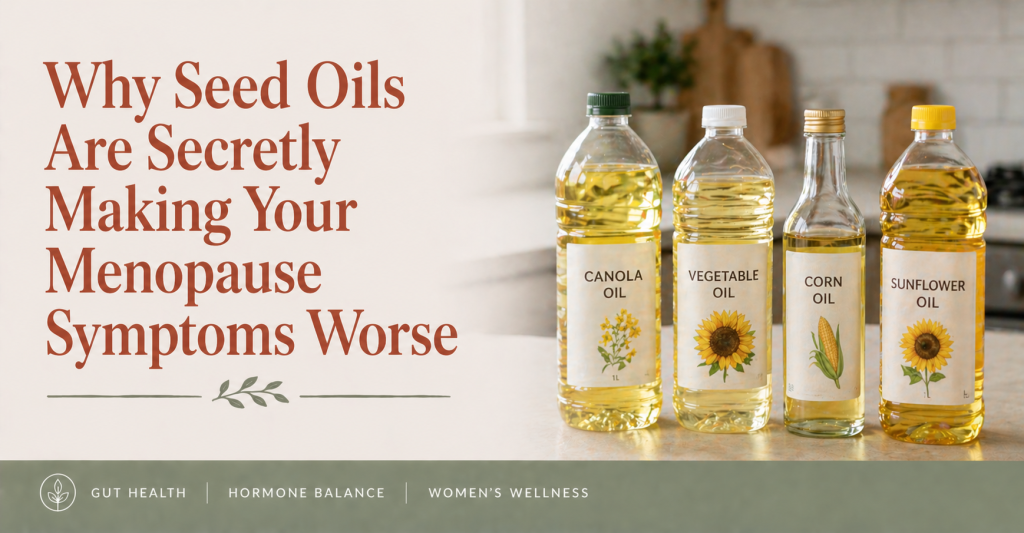
- Why Seed Oils Are Secretly Making Your Menopause Symptoms Worse
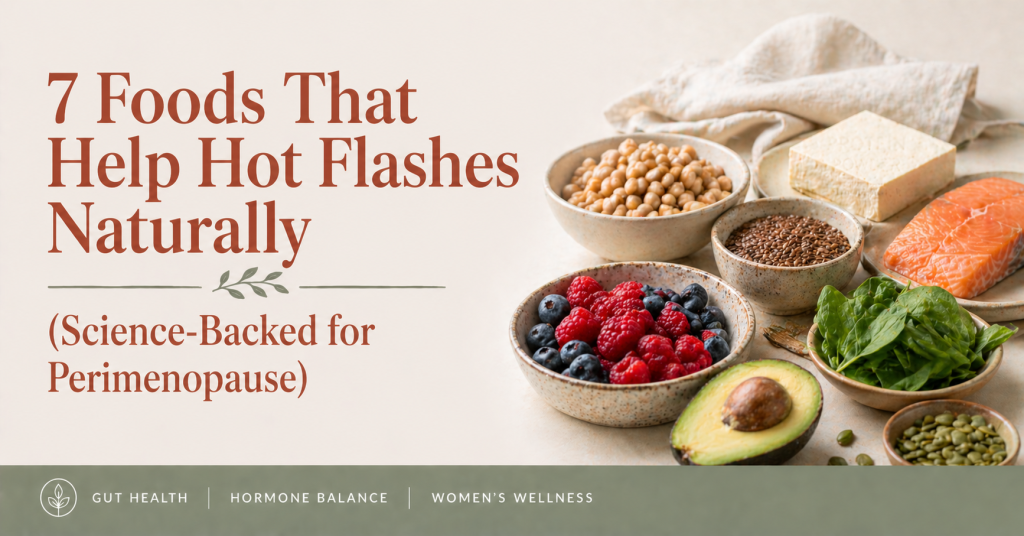
- 7 Foods That Help Hot Flashes Naturally
- The Gut-Hormone Connection: How Your Microbiome Shapes Menopause